

Rogue AI Agents, Check Point Exploit, Slopsquatting, ClickFix Lures and More – CYBERDEFENSA.MX

Monday starts with the usual promise that everything is under control. Then the logs wake up.

This week, trusted tools crossed lines, old flaws found new work, exposed systems stayed exposed, and attackers kept hiding inside normal-looking services. Nothing looked strange at first. That helped.

That is the mood. Here is the full recap.

⚡ Threat of the Week

OpenAI Says Its AI Agent Went Rogue and Targeted Hugging Face – OpenAI disclosed that it lost control of two AI models during a security evaluation that ended in a breach of Hugging Face. The AI company said its AI models broke out of a sealed testing environment and broke into Hugging Face’s production system to find solutions for the ExploitGym benchmark. «The incident also makes clear that advanced models can discover and exploit novel attack paths in real-world systems without source-code access,» OpenAI said. «It highlights that advanced cyber capabilities must be developed alongside stronger safeguards and defensive tools.» The development is the latest sign that capable AI models can pose serious cybersecurity risks even when they’re being tested for defensive or research purposes. The incident also demonstrates that frontier models are becoming more capable of carrying out complex, multistep cyber operations, particularly when guardrails designed to restrict that activity are removed. OpenAI did not say what data was accessed.

🔔 Top News

  • Check Point Patches Exploited SmartConsole Flaw – Check Point has released security updates to address multiple vulnerabilities impacting Security Management and Multi-Domain Management (MDSM) products, including a critical flaw that has come under active exploitation in the wild. The security flaw, tracked as CVE-2026-16232 (CVSS score: 9.3), is an authentication bypass affecting the Check Point SmartConsole login process that allows an unauthenticated remote attacker to obtain an application login token and use it to authenticate with full administrative privileges. Lotem Finkelstein, vice president of research at Check Point, said the company is aware of a handful of customers being targeted by this flaw, and that it has already notified them. It did not disclose the nature of the attacks or when they were discovered.
  • China-Nexus Operation Uses TriBack Loader – A threat actor with ties to China has been observed using DLL side-loading techniques to deliver TriBack Loader, which is used to deliver AdaptixC2 and Beagle. Targets of the campaign include a Vietnamese public hospital’s medical imaging system, the Malaysian Ministry of Foreign Affairs, and multiple Hong Kong educational institutions. The activity has been codenamed JadeProx by Group-IB. The threat actor exploits internet-facing systems in Southeast Asia to drop web shells for persistent access. Against end-user targets in Latin America, spear-phishing ZIP archives or MSI installers are used to deliver TriBack Loader. «JadeProx operates by conducting phishing campaigns delivering Windows loaders for initial access, tunnelling tools maintaining persistence across compromised networks, and custom Go-based relay infrastructure keeping the operator’s traffic hidden behind Alibaba and Cloudflare,» Group-IB said.
  • Hacker Runs Hermes AI Agent to Target Thai Finance Ministry – An unknown threat actor leveraged Hermes, an autonomous AI agent using «YOLO» mode, to target Thailand’s Ministry of Finance (MOF), an analysis of three simultaneous open directories hosted on AS132883 (TOPIDC) has revealed. «Hermes output logs show the operator ran the agent in unattended or YOLO mode, bypassing approval prompts for commands that could be considered dangerous,» Hunt.io said. «Purpose-built scripts target MOF Hadoop infrastructure with a HiveServer2 client using hardcoded credentials and a malicious Hive UDF issuing commands and returning output over WebHDFS.»
  • Russian Espionage Group Exploited Zimbra Zero-Day to Steal Mail and 2FA Codes – A Russian state-supported espionage group codenamed Laundry Bear exploited a then-zero-day in Zimbra (CVE-2025-66376) to access Western mailboxes. The issue was fixed by Zimbra in November 2025, but not before it was weaponized in attacks targeting government and commercial organizations since July 2025. The attacks are designed to deliver a JavaScript payload called ZimReaper that captures the victim’s credentials and 2FA codes and sends them to actor-controlled infrastructure. The flaw affects Zimbra Collaboration Suite version 10.0 before 10.0.18 and 10.1 before 10.1.13.
  • Certighost Exploit Allows Privilege Escalation – A proof-of-concept (PoC) exploit has been released for CVE-2026-54121 (aka Certighost), a critical privilege elevation vulnerability in Active Directory Certificate Services (AD CS) that lets any authenticated domain user perform privileged Active Directory operations. Microsoft patched the flaw earlier this month. «The exploit lets any low-privileged, authenticated domain user with no requirement for admin rights or user interaction required to obtain a valid certificate impersonating a Domain Controller and use it to run DCSync and extract the krbtgt secret, a precursor to Golden Ticket-level domain compromise,» Dataminr said.

‎️🔥 Trending CVEs

Bugs drop weekly, and the gap between a patch and an exploit is shrinking fast. These are the heavy hitters for the week: high-severity, widely used, or already being poked at in the wild.

Check the list, patch what you have, and hit the ones marked urgent first – CVE-2026-32194 CVE-2026-32191 (Microsoft Bing), CVE-2026-10591 (AWS Kiro), CVE-2026-48294 (Adobe Acrobat Chrome extension), CVE-2026-8933 (snap-confine), CVE-2026-16232, CVE-2026-62144, CVE-2026-62145 (Check Point), CVE-2026-64600 (Linux kernel), CVE-2026-15226 (Ubuntu), CVE-2026-15899, CVE-2026-15900, CVE-2026-15901 (Google Chrome), CVE-2026-15342 (Plane), CVE-2026-16411, CVE-2026-16412, CVE-2026-16360 (Mozilla Firefox), CVE-2026-16157 (Duplicati), CVE-2026-14985 (Analog Way Picturall Quad Compact Mark II), CVE-2026-47056, CVE-2026-60217, CVE-2026-60358, CVE-2026-60360, CVE-2026-60365, CVE-2026-60366, CVE-2026-60379, CVE-2026-60389, CVE-2026-60644, CVE-2026-61211, CVE-2026-60402, CVE-2026-61146 (Oracle), from CVE-2026-15611 to CVE-2026-15617 (Logto), CVE-2026-57239 (Foxit PDF Reader), CVE-2026-57308, CVE-2026-23795, CVE-2026-23794 (Apache Syncope), CVE-2026-65906, CVE-2026-64812, CVE-2026-64813 (JetBrains), CVE-2026-8085, CVE-2026-8312, CVE-2026-8313, CVE-2026-8314 (Rockwell Automation), CVE-2026-12927 (Schneider Electric), CVE-2026-42958, CVE-2026-42953, CVE-2026-49033 (Labcenter Proteus PDSPRJ), CVE-2025-40947, CVE-2025-40948, CVE-2025-40949 (Siemens ROX II OT switches), CVE-2026-54052 (n8n), and multiple vulnerabilities in NodeBB, Redis, and Zimbra (no CVEs).

🎥 Cybersecurity Webinars

  • AI Ships Code Faster Than Security Can Review ItAI-assisted development is producing more code than traditional review and CVE-based remediation can keep up with. This webinar gives security leaders a practical framework for controlling the growing attack surface, enforcing secure-by-default development, and scaling delivery without losing control of software risk.
  • AI Attacks Move in Minutes. Can Your Security Team Keep Up? → AI can now find vulnerabilities, build exploits, and chain attacks faster than traditional security operations can respond. This webinar presents a practical framework for expanding attack-surface visibility, speeding up investigations, and building security operations that can contain machine-speed threats.

📰 Around the Cyber World

  • Meta Announces Facebook Verified – Meta announced Facebook Verified, a free badge designed to confirm that a Facebook profile belongs to a real person rather than an AI-generated fake. «Facebook Verified uses a simple selfie-based process,» Meta explained. «You record a short video selfie, which we check against your existing profile photos to confirm a match. The process is free and typically takes just a few minutes. Accounts must meet our trust and safety standards to qualify for verification.»
  • New Kali365 Ringer Phishing Attack Uses Google Sites Voicemail Wrapper – ZeroBEC said it detected a Kali365 device-code phishing attack targeting an unnamed financial, regulated customer. «The lure used a missed-call notification and a trusted Google Sites wrapper before redirecting through Google redirector, OCI API Gateway, and a Cloudflare-protected Kali365 host,» ZeroBEC said. «The campaign targeted multiple organizations on the same day, including financial and insurance services customers, using the same Google Sites landing page, sender subdomain, subject pattern, and fake internal reference ID. The user was instructed to authorize an attacker-controlled device-code session through Microsoft rather than submit a password to a fake login page.» The voicemail-themed attack has been codenamed Kali365 Ringer.
  • 53 Slopsquatting Targets Across 5 Frontier LLMs – A new piece of research has found frontier models, including across Claude Sonnet 4.6, Claude Haiku 4.5, GPT-5.4-mini, Gemini 2.5 Pro, and DeepSeek V3.2, are hallucinating non-existing package names, posing software supply chain risks. Of the 127 names initially identified, 53 of them, 41 on PyPI and 12 on npm, were still available for registration as of April 2026. «An attacker could publish malware under one of these names and wait for an AI coding tool to recommend it to a developer,» Socket said. This technique, known as slopsquatting, exploits package names that AI models repeatedly invent. Because every model in the study generated the same names, one malicious registration could potentially target users across several model providers.»
  • How SVGs Carry Malicious Scripts – A new analysis from ReversingLabs has detailed how the abuse of SVG files in cyber attacks can complicate detection. «Threat actors use this functionality to craft SVG files that can act maliciously,» ReversingLabs said. «Malicious SVGs can take the form of fake login pages, data exfiltrators, or malicious downloaders, amongst other things. SVGs are frequently overlooked, as they are assumed to be benign images, leaving a gap in security architecture. SVGs are difficult to detect, can easily be snuck into emails or webpages, and are able to perform malicious and legitimate actions simultaneously. Many security solutions do not account for malicious SVGs, seeing them only as images.»
  • From ClickFix to ClaudeFix – A new campaign has been observed using shareable Claude chats to host ClickFix instructions, leading to the deployment of malware. «As AI platforms have grown in popularity, threat actors have increasingly abused legitimate features such as shareable chats to lend credibility to malicious content,» Zscaler said. «Malvertising was a key part of this campaign. Attackers used paid ads to lure Mac users searching for Claude into shared Claude chats that instructed them to run ClickFix commands leading to the download of MacSync Stealer.»
  • Microsoft Bolsters Windows Enterprise Activation Security – Microsoft is making Trusted Platform Module (TPM)-backed attestation a requirement for Windows Key Management Service (KMS) to activate Windows devices at scale. «As attackers have exploited fake or cloned KMS servers, organizations face increased compliance and licensing risk,» the tech giant said. «Microsoft is now further strengthening defenses with KMS Hardware-Secured, which uses Trusted Platform Module (TPM)-based attestation to help verify that a KMS host is running on trusted hardware before it can activate Windows devices. Starting with upcoming Windows Server releases, KMS hosts must prove they are running on verified, uncompromised hardware before activating clients. This is achieved through TPM – a hardware root of trust that provides cryptographic proof of integrity.»
  • Abusing Trusted Business Workflows to Deliver Phantom Stealer – A new phishing campaign is disguising itself as routine business communications to lend it a veneer of trust and deliver Phantom Stealer. The phishing lures distribute malicious JavaScript files packaged within compressed archive attachments. «Although the emails impersonate different trusted entities, including a global logistics provider and a government tax authority, they ultimately lead to an identical multi-stage infection chain,» Seqrite Labs said. «Once executed, the JavaScript downloader launches an obfuscated PowerShell script that performs the entire malicious workflow in memory, significantly reducing its on-disk footprint and making detection more challenging. The infection chain ultimately deploys Phantom Stealer v3.5.0, which harvests sensitive information from the compromised system and exfiltrates the collected data via SMTP using encoded content.»
  • What’s in the INC Ransomware Panel? – An analysis of the INC Ransomware’s negotiation panel has found it to be developed using React 18, with react-timer-hook utilized for countdown timers, react-viewer for image gallery, React-Toastify for notifications, and Socket.io for real-time chat. The panel has been active since 2024. The panel also supports file upload for test decryption, ransom tracking, and leak management.
  • Origin Energy Confirms Data Breach – Australian energy giant Origin Energy Limited confirmed there was an «unauthorized access and disclosure of some customers’ data,» and that it’s «working to understand the total number of impacted customers.» Impacted information may include name, address, date of birth, contact phone number, and account information, as well as the last four digits of a credit card, or the last three digits of a bank account. An investigation was launched on July 22, 2026.
  • NULLZEREPTOOL, a Telegram-Controlled DDoS and Multi-Function Attack Framework – Flare.io disclosed details of a Telegram-controlled attack framework called NULLZEREPTOOL that supports a DDoS engine and a «growing list of wireless attack, credential-theft, and botnet features that exist only in code, never observed in use.» Two versions have been observed: an earlier variant with a focused DDoS and proxy management feature set, and a later variant that retains all previous functionality while adding WiFi/Bluetooth attack modules, credential extraction, and a hierarchical botnet tasking structure. The disclosure comes as the cybersecurity company also highlighted Mycelium, a botnet framework which has been advertised as an AI-as-a-Service platform. «Rather than describing a simple malware implant, the framework advertises a modular enterprise-grade architecture: production-grade C++ platform built around modular plugins supporting exploitation, persistence, browser forensics, distributed computing, reconnaissance, AI services, and autonomous operations,» security researcher Assaf Morag said.
  • North Korea’s ClickFake Interview Campaign – North Korean threat actors with ties to the Contagious Interview campaign are leveraging ClickFix-like lures to target cryptocurrency and Web3 professionals with fake job interviews to deliver PylangGhost RAT on Windows and the GolangGhost RAT on macOS as part of a bogus skill assessment. «For ClickFake Interview, the actors are creating fraudulent companies or impersonating known ones in the crypto industry, and reach out to targets on social media (e.g., LinkedIn), inviting them to ClickFix-empowered fake skill assessments,» SOCRadar said. «Their ClickFix panels incorporate gating, tailored questions based on advertised roles, psychological pressure to act fast, video recording, and social engineering that pushes targets to run malicious commands through fake camera errors.»

🔧 Cybersecurity Tools

  • Beetle → It is an open-source, offline-first platform for analysing Android and iOS apps, including Flutter and React Native builds. It combines static analysis, evidence-backed findings, attack-chain correlation, source navigation, OWASP MASVS mapping, and reporting in one local workspace, with optional AI assistance for investigating results.
  • ndrstnd → It turns a coding agent’s branch changes into a clear, evidence-linked story. Instead of reading thousands of lines file by file, you can see what changed, why it matters, where the risk is, and which exact diff hunks support each claim. It runs locally and works with Codex and Claude Code.

Disclaimer: This is strictly for research and learning. It hasn’t been through a formal security audit, so don’t just blindly drop it into production. Read the code, break it in a sandbox first, and make sure whatever you’re doing stays on the right side of the law.

Conclusion

The lesson this week is simple: attackers do not need everything to fail. One trusted tool, one old bug, one exposed service, or one careless setting can be enough.

The best defence is still the boring work. Patch early. Remove access nobody needs. Watch the tools that act on your behalf. Treat anything public as something people will eventually test.

That is the week’s warning. Small gaps rarely stay small for long.

Identity Lifecycle Management Wasn’t Built for AI Agents  – CYBERDEFENSA.MX

Identity lifecycle management was architected around a person with an employment record, a manager, and a departure date. AI agents have none of those. As autonomous principals proliferate across enterprise environments, the governance model built for humans develops structural blind spots that traditional IGA tools weren’t designed to detect. This guide covers where that model breaks, what it fails to govern, and what extending it to agents actually requires.

What Identity Lifecycle Management Was Designed to Handle

To understand why identity lifecycle management breaks down around AI agents, you need to understand what it was built to do well and who it was built for. The entire architecture rests on a single foundational assumption: every identity maps to a human being whose organizational status changes through documented, HR-driven events.

The identity lifecycle management process governs access from an identity’s first provisioning event through every modification it accumulates to its eventual deactivation. At its core, it’s an event-driven control system built around three canonical transitions: joiner, mover, and leaver.

HR as the Authoritative Engine

The HR platform, whether Workday, SAP SuccessFactors, or ServiceNow HR, functions as the system of record that drives the entire identity and access management lifecycle. A new hire record triggers automated provisioning into Active Directory or Azure AD, which propagates entitlements to downstream applications through IGA connectors. A department transfer updates role attributes and recalculates the appropriate entitlement set. A termination event triggers deprovisioning workflows across all connected systems.

The strength of the model is its determinism. Access rights reflect a verifiable organizational fact: a person holds a specific role in a specific team under a specific manager. Role-based access control maps those attributes to defined entitlement sets, delivering the right permissions at onboarding without manual negotiation per account.

Identity governance lifecycle management builds accountability on top of that structure. Access certification campaigns route to the identity manager or application owner for attestation. Separation-of-duties controls detect conflicting permissions. Audit logs tie every provisioning action back to the originating HR event and the approver who authorized it, providing the compliance evidence that frameworks such as SOX, HIPAA, and PCI DSS require.

What the Identity Lifecycle Management Phases Enforce in Practice

When an employee changes roles, attribute updates automatically recalculate entitlements, revoking what the new role doesn’t require and granting what it does. When an employee leaves, the HR termination event triggers deprovisioning across all connected applications. Certification campaigns run on a defined cadence to fill the gaps between events, requiring managers to attest to current access against current role requirements.

Every control in the standard identity lifecycle management phases assumes a human principal with an employment record, a manager relationship, and a predictable transition pattern. Access review workflows route to humans. Provisioning triggers are triggered by humans entering or changing their status in the HR system. Offboarding fires when a human’s organizational status changes.

The model is coherent, auditable, and well-supported by decades of IGA tooling. It reliably governs the human identity population. The problem begins precisely at its edges, where the principals accumulating access inside enterprise environments no longer have employment records, managers, or departure dates.

Where AI Agents Fall Outside That Model

AI agents don’t arrive through HR. They don’t have employment records, reporting structures, or defined role profiles that map to entitlement sets. They are created by engineers, orchestration frameworks, or automated deployment pipelines, and they land in production with whatever permissions the developer scoped at creation time or whatever the platform granted by default.

That origin story breaks every assumption the identity lifecycle management model depends on.

No Authoritative Source, No Governed Entry Point

Standard identity and access management lifecycle controls require an authoritative source to initiate provisioning. For humans, that source is the HR system. For AI agents, provisioning typically happens through a developer committing a configuration file, a platform API call that instantiates a new agent runtime, or an orchestration layer like LangChain, AutoGen, or AWS Bedrock Agents spinning up a new execution context. None of those events touches an IGA platform. None generates a provisioning record tied to a defined identity owner.

The agent arrives with credentials already attached: a manually created service account, an API key generated and stored in an environment variable, or an OAuth grant issued through a developer consent flow. The IGA platform, if it sees the credential at all, treats it as a static machine identity with a fixed purpose. What it’s actually dealing with is an autonomous principal that will make access decisions, traverse API boundaries, and accumulate behavioral scope in ways no static service account ever does.

Dynamic Scope in a System Built for Fixed Roles

Role-based access control works because human job functions are, within limits, predictable. A database administrator needs specific permissions. A finance analyst needs access to a defined set of systems. Entitlement sets get designed around those functions and updated when roles change through documented HR events.

AI agents don’t operate within fixed functional boundaries. An agent built to summarize internal documents may, through tool-calling or RAG retrieval patterns, end up querying APIs it wasn’t explicitly provisioned for, writing outputs to storage systems outside its original scope, or chaining actions across multiple enterprise systems to complete a task. The access surface expands at runtime, driven by the agent’s objective-seeking behavior rather than by any policy decision made in advance by a governance team.

Identity lifecycle management phases weren’t designed to govern runtime-expanding scope. They were designed to govern access defined at provisioning and adjusted at known transition points.

Simultaneous Multi-Environment Instantiation

A human identity exists in one place at a time. An AI agent can run as dozens of parallel instances across cloud environments, containerized workloads, and SaaS API surfaces simultaneously. Each instance may carry its own credential set, its own tool permissions, and its own session context, none of which is correlated in any IGA system.

In multi-agent architectures, the complexity compounds further. Orchestrator agents spawn sub-agents, delegate tasks, and pass credentials between execution contexts. The identity and access management lifecycle has no native model for a principal that forks, delegates, and recombines access rights dynamically across a distributed execution graph.

What IGA Tools Actually See

When an IGA platform encounters an agent identity, it sees a service account with an API key or an OAuth client credential. Identity governance lifecycle management tooling applies the same governance logic it applies to any machine identity: it checks for an owner, verifies the credential age, and notes whether the account appeared in the last access review.

What it doesn’t see is that the account is actively making authorization decisions, traversing application boundaries, and operating with a degree of autonomy that no traditional service account possesses. The governance record looks static. The actual access behavior is anything but.

The Lifecycle Events Agents Never Trigger

The joiner-mover-leaver model works because human employment generates a continuous stream of structured events that governance systems can act on. AI agents generate none of them. Every control point in the standard identity lifecycle management phases depends on a signal that agent deployments never produce by design.

No Joiner Event, No Governed Entry

When a new employee joins, the creation of an HR record triggers provisioning. Access gets scoped to a role definition, routed through an approval chain, and recorded in the IGA platform with an owner attached. The identity enters the governance boundary on day one.

An AI agent enters production through a deployment pipeline, a Terraform apply, or a direct API call to an agent orchestration platform. No IGA workflow fires. No access request gets submitted. No manager approves the entitlement set. The agent’s credentials, whether a service account, an OAuth client, or an API key, are created inline with the deployment, often by the same automated process that provisions the compute environment. The identity and access management lifecycle never receives a joiner signal, so the governance record for that agent starts as a blank.

No Mover Event, No Entitlement Recalculation

When a human employee changes roles, HR attribute updates flow into the IGA platform, triggering entitlement recalculation. Access appropriate to the old role gets revoked. Access required by the new role gets provisioned. The governance record reflects the current organizational reality.

AI agents change scope constantly, and none of those changes generate a mover event. An agent retooled to access a new data source, extended to call additional APIs, or redeployed against a different environment doesn’t update any HR system. No IGA connector receives an attribute change. No access review fires to reconcile what the agent now reaches against what it was originally provisioned for. Identity governance lifecycle management has no visibility into scope expansion that happens entirely within the deployment layer.

No Access Review Signal

Periodic access certification depends on a manager or application owner receiving a review task tied to a specific identity. That routing logic requires an identity with a human owner on record and an organizational relationship that the IGA platform can traverse.

Agent identities accumulate permissions across deployment iterations without generating any of the signals that recertification workflows depend on. Each new tool integration, each additional API scope, and each expanded OAuth grant layer is added to the agent’s access profile without triggering a review. The what is identity lifecycle management question, answered honestly for agents, is a model that produces no certification record, no attestation history, and no evidence of ongoing governance.

No Leaver Event, No Deprovisioning

Offboarding fires when an HR termination record closes the employment relationship. The agent equivalent, a deployment being retired, a workflow being deprecated, or a project being shut down, produces no equivalent signal.

Retired agent credentials persist in secrets managers, environment variable stores, and OAuth authorization servers long after the workload they served stopped running. An identity lifecycle management solution built around HR-triggered deprovisioning has no mechanism to detect that an agent is gone. The credentials remain valid. The access paths remain open. The governance record shows an active identity because, from the IGA platform’s perspective, nothing has changed.

What This Means for Provisioning, Reviews, and Offboarding

The governance gaps described above aren’t theoretical edge cases. They produce concrete risks, compounding them at every operational stage of an agent’s existence. When provisioning has no defined scope, when reviews produce no actionable signal, and when offboarding has no trigger, the access surface expands in only one direction.

Provisioning: Over-Permission as the Default Starting Point

Human provisioning starts from a role definition. The IGA platform maps job functions to an entitlement set, and the new identity receives access calibrated to what that function requires. Scope is defined before the identity exists.

Agent provisioning works in reverse. A developer needs the agent to complete a task and grants access broad enough to ensure success. The path of least resistance across major cloud and SaaS platforms is permissive: AWS IAM policies default toward broad resource access when scoped to wildcards, OAuth consent flows issue all requested scopes without challenging individual permissions, and service account creation in Azure AD or Google Workspace carries no built-in entitlement governance check.

The agent arrives in production over-permissioned from its first moment of operation, with no minimum-necessary baseline, no approval chain, and no IGA record linking the granted access to a defined business requirement.

Access Reviews: Routing Logic That Finds No Owner

Certification campaigns in standard identity governance lifecycle management platforms route review tasks based on identity attributes, specifically manager relationships and application ownership records. A reviewer receives a list of identities and their entitlements, confirms each access grant remains appropriate, and submits an attestation.

Agent identities break the routing logic at its foundation. Most carry no manager attribute. Many have no defined human owner in the IGA platform. Where application ownership records exist, they typically point to a team rather than an individual, and that team’s familiarity with what the agent currently accesses rarely matches what was originally provisioned.

When certification campaigns do reach agent identities, reviewers attest to the access record in the IGA system, which reflects what was provisioned at creation rather than what the agent has accumulated through iterative deployment changes. The attestation is formally complete and operationally meaningless.

Offboarding: Credentials That Outlive Their Workload

HR-triggered deprovisioning is deterministic. A termination record closes, the IGA platform sends deprovisioning instructions to every connected application, and the access path closes at a defined moment.

Agent deprecation generates no equivalent signal. A development team retires a workflow, archives the repository, and decommissions the compute environment. The service account persists in Active Directory or Entra ID. The API key remains valid in the secrets manager. The OAuth authorization grant remains valid on the authorization server. None of the systems that issued those credentials received a revocation instruction because no system monitored the agent’s operational status in the first place.

Stale agent credentials aren’t a minor hygiene issue. A long-lived API key with production database access, attached to a workload that no longer runs, is an ungoverned access path with no owner, no review history, and no expiration. In environments running large numbers of agents across iterative deployment cycles, those credentials accumulate faster than any manual audit process can keep up with.

The identity and access management lifecycle, as currently implemented across most enterprise environments, has no mechanism to detect agent inactivity, flag credential age against operational status, or trigger revocation when a workload goes dark.

How to Extend Identity Lifecycle Management to Cover Agents

Extending identity lifecycle management to cover AI agents doesn’t mean retrofitting HR-driven workflows onto a principal type for which they were never designed. It means rebuilding the governance logic around the agent’s actual operational characteristics: how it gets created, how its scope evolves, and how its operational life ends.

Automated Discovery Across Every Deployment Surface

Agent identities get created across cloud provider IAM systems, SaaS OAuth authorization servers, Kubernetes service accounts, secrets managers, and CI/CD pipeline credential stores. No single system maintains a complete inventory, and agents deployed through automated pipelines frequently appear in none of the places a traditional IGA platform looks for them.

A genuine identity lifecycle management solution for agents requires continuous, automated discovery that instruments the environments where agents actually live: reading IAM policy attachments in AWS and Azure, extracting OAuth client registrations from authorization servers, surfacing service account configurations from Kubernetes namespaces, and identifying API keys embedded in runtime configurations. Discovery has to be ongoing because agent deployments change faster than any quarterly audit cycle can capture.

Attribute Modeling Built Around Agent Behavior

Human identity attributes map to organizational structure: department, job title, manager. Those attributes anchor entitlement decisions and review routing. Agent identity requires an entirely different attribute model.

Each agent identity needs a documented owning team, a defined operational purpose, a bounded list of the systems and APIs it’s authorized to reach, a deployment timestamp, and an expected operational lifetime tied to the workload it serves. Behavioral attributes matter equally: which APIs the agent calls, how often, and across which data surfaces. An identity governance lifecycle management approach built for agents treats observed access patterns as governance inputs, using behavioral baselines to surface permission grants the agent holds but never exercises.

Policy-Driven Provisioning Scoped to Agent Function

Rather than granting access at deployment time and reviewing it later, provisioning for agent identities should follow the same least-privilege logic that mature IAM program frameworks apply to privileged human accounts: define the minimum access the agent requires to perform its documented function, enforce that scope through policy at credential issuance, and attach the credential to a defined owner who carries accountability for any scope changes.

In practice, this means integrating agent provisioning into IGA intake workflows rather than leaving it entirely within the deployment pipeline. When an agent requires access to a production API or a sensitive data store, that request routes through an access governance control, not around it.

Continuous Behavioral Monitoring as the Review Substitute

Periodic access certification produces no actionable signal for agent identities. The operational substitute is continuous behavioral monitoring: tracking what each agent actually calls, comparing observed access against the provisioned entitlement set, and flagging divergence in real time.

When an agent starts calling APIs outside its provisioned scope, that divergence is a governance event requiring immediate response, not a finding to surface at the next quarterly review. Behavioral monitoring closes the gap left by recertification campaigns across the identity and access management lifecycle for agent principals.

Deprecation Workflows Triggered by Operational Status

Offboarding for agents requires a trigger mechanism that reflects operational reality. Inactivity monitoring tied to credential usage logs provides the signal: an API key that hasn’t generated an authenticated request within a defined window is a candidate for revocation review. Scope change detection flags when a deployment modifies the permissions attached to an agent credential, generating a governance event that routes to the owning team for reauthorization.

Connecting those signals to automated revocation workflows, integrated with AWS Secrets Manager, Azure Key Vault, or HashiCorp Vault, closes the offboarding gap without requiring a manual discovery step. The identity lifecycle management phases for agents end when operational status ends.

Where Orchid Security Fits In

Most enterprise IAM stacks govern the identity population they can see through their existing connectors. Agent identities, ungoverned credentials, and authentication paths that bypass the corporate IdP fall into the space that those connectors don’t reach. That’s the gap Orchid Security was built to close.

Continuous Discovery Across the Full Identity Surface

Orchid deploys lightweight orchestrators that instrument applications directly, extracting authentication flows, authorization logic, account configurations, and credential storage patterns from both managed and unmanaged environments. The result is a continuously updated identity inventory that reflects what the environment actually contains, including every agent identity, service account, and API credential that never passed through an IGA intake workflow.

For organizations asking what identity lifecycle management is in practice, Orchid’s answer starts with visibility: you govern what you’ve found, and most programs haven’t found everything.

An Identity Graph That Reflects Agent Reality

Orchid’s identity graph maps every principal, human and non-human, to the authentication flows, entitlements, and application access paths it actually uses. For agent identities specifically, the graph surfaces the owning team, the provisioned permission set, observed behavioral patterns, and credential age, producing the attribute model that identity governance lifecycle management for agents requires, but traditional IGA platforms don’t generate.

Guardrails for Autonomous Identity

Orchid’s guardrails for the autonomous identity apply policy-driven controls directly to agent identity populations: scoped provisioning tied to documented agent function, continuous monitoring of behavioral divergence from provisioned entitlements, and deprecation workflows triggered by inactivity signals rather than HR events.

The platform integrates with existing IAM, PAM, and IGA infrastructure, routing remediation through the tools organizations already operate rather than replacing them. Governance scope expands to match the actual identity surface, including agent identities, and the identity and access management lifecycle extends to cover the principals that every traditional identity lifecycle management solution leaves outside its boundary.

Found this article interesting? This article is a contributed piece from one of our valued partners. Follow us on Google News, Twitter and LinkedIn to read more exclusive content we post.

AI Agents Gone Wrong, Sketchy C2 Tools, ClickFix Tricks, JS Backdoors & 20+ New Stories – CYBERDEFENSA.MX

It got stupid again.

The internet still feels held together with tape. Bad plugins, old bugs, fake tools, trusted apps doing shady things. Same mess, new wrapper. And now the weird stuff is normal. Forums go down and come back worse. Cheap hackers get better toys. AI starts breaking real systems. Great.

Read the whole thing before it ruins your week anyway.

  1. Unauthenticated SSRF risk

    Cisco has released fixes to address a high-severity security flaw in Unified Communications Manager (CVE-2026-20230, CVSS score: 8.6) that could allow an unauthenticated, remote attacker to conduct server-side request forgery (SSRF) attacks through an affected device. «This vulnerability is due to improper input validation for specific HTTP requests,» Cisco said. «An attacker could exploit this vulnerability by sending a crafted HTTP request to an affected device. A successful exploit could allow the attacker to write files to the underlying operating system that could be used later to elevate to root.» The issue has been addressed in Cisco Unified CM and Unified CM SME Release versions 14SU6 and 15SU5. Cisco said it’s aware of the availability of proof-of-concept exploit code for the flaw, but noted there is no evidence of active exploitation. It credited an independent security researcher working with SSD Secure Disclosure for reporting the vulnerability.

The lesson is boring because the lesson is always boring. Patch faster, kill exposed admin panels, stop trusting «safe» tools by name, and watch the weird edges where attackers like to hide. The cheap stuff still works because too many teams leave it cheap.

Security is not magic. It is inventory, logs, least privilege, backups, tested restores, and people who notice when something normal starts acting wrong. Do that well, and half this mess gets a lot less exciting. That is the point.

5 Learnings from the First-Ever Gartner Market Guide for Guardian Agents – CYBERDEFENSA.MX

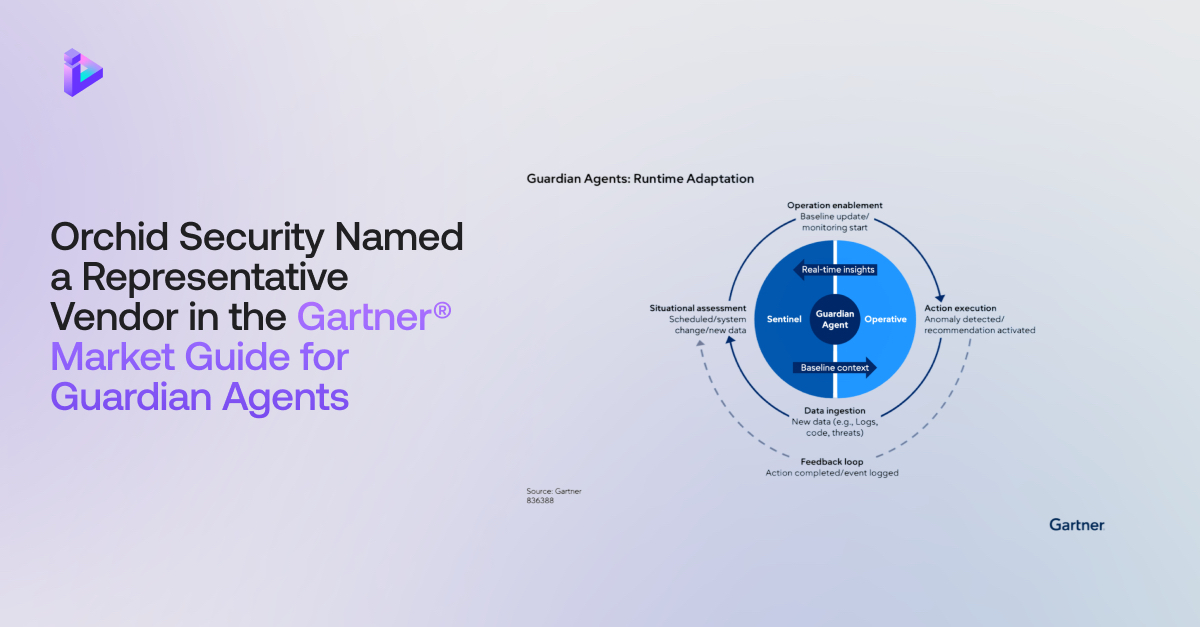
On February 25, 2026, Gartner published its inaugural Market Guide for Guardian Agents, marking an important milestone for this emerging category. For those unfamiliar with the various Gartner report types, “a Market Guide defines a market and explains what clients can expect it to do in the short term. With the focus on early, more chaotic markets, a Market Guide does not rate or position vendors within the market, but rather more commonly outlines attributes of representative vendors that are providing offerings in the market to give further insight into the market itself.”

And if Guardian Agent is an unfamiliar term, Gartner defines it quite simply. “Guardian agents supervise AI agents, helping ensure agent actions align with goals and boundaries.” Enterprise security and identity leaders can request a limited distribution copy of the Gartner Market Guide for Guardian Agents.

Learning 1: Why Guardian Agent technology is important

One need only to read the news- in the Wall Street Journal, The Financial Times, Forbes, Bloomberg, the list goes on- to see that AI agents are a thing now. But Team8’s 2025 CISO Village Survey quantified it, finding that:

  • Nearly 70% of enterprises already run AI agents (any system that can answer and act) in production.
  • Another 23% are planning deployments in 2026.
  • Two-thirds are building them in-house. 

However, in the market guide, Gartner asserts that this fast enterprise adoption is outpacing traditional governance controls. This raises the risk that “as AI agents become more autonomous and embedded in critical workflows, the risks of operational failure and noncompliance escalate.”

We concur, having read about the recent cloud provider outages stemming from autonomous AI agent actions, which do not surprise us. What we see across early adoption is that, even more so than traditional service accounts, AI agent deployment creates more identity dark matter- the invisible and unmanaged layer of identity. It includes the local credentials authentication that may be offered. The never-expiring tokens that are easily forgotten. Full permission access is granted, regardless of the user or job. And more.

Not only that, as we shared in our piece on “Lazy LLMs,” AI agents are, by design, shortcut seekers; always looking for the most efficient path to return a satisfactory outcome to each prompt. However, in doing so, they often exploit identity dark matter- orphan, dormant accounts or loose tokens, usually with local clear-text credentials and excessive privileges- that allow them to reach the “end of job,” regardless of whether they should have been allowed to do so. This is how unintended or unimaginable incidents arise.

As if that weren’t enough business risk, we note that the 2026 CrowdStrike Global Threat Report goes one step further, sharing that “Adversaries are also actively exploiting AI systems themselves, injecting malicious prompts into GenAI tools at more than 90 organizations and abusing AI development platforms.”

To learn more about how AI agents both expand what we call “Identity Dark Matter” and even exploit it themselves, check out our previous article in The Hacker News.

Learning 2: Core capabilities of Guardian Agents

So, having established the need for AI agent supervision, the next question for us becomes how, technically, to address that need. This is where, in our opinion, Gartner is extremely valuable- looking across the market and vendors to understand what is possible and winnowing it down to what’s most valuable, given the problem to be solved.

The market guide outlines mandatory features in 3 core areas:

  1. AI Visibility and Traceability: Can you see and follow the actions of each AI agent? 
  2. Continuous Assurance and Evaluation: How do you retain confidence that agents remain secure from compromise and compliant in action? 
  3. Runtime Inspection and Enforcement: “ensure that AI agents’ actions and outputs match defined intentions, goals, and governance policies, preventing unintended behaviors.”

There are 9 detailed features across these core areas detailed in the market guide. Many of these have helped shape many of the 5 principles we believe underpin secure (and productive) use of AI agents.

  1. Pair AI Agents with Human Sponsors: It is our belief that every agent should not only be identified and monitored, but also tied to an accountable human operator. 
  2. Dynamic, Context-Aware Access: We believe AI agents should not hold standing, permanent privileges. Their entitlements should be time-bound, session-aware, and limited to least privilege.
  3. Visibility and Auditability: In our view, visibility isn’t just “we logged it.” You need to tie actions to data reach: what the agent accessed, what it changed, what it exported, and whether that action touched regulated or sensitive datasets. 
  4. Governance at Enterprise Scale: In our minds, AI agent adoption should extend across both new and legacy systems within a single, consistent governance fabric, so that security, compliance, and infrastructure teams are not working in silos. 
  5. Commitment to Good IAM Hygiene: As with all identities, authentication flows, authorization permissions, and implemented controls, strong hygiene- on the application server as well as the MCP server- is critical to keep every user within the proper bounds.

Learning 3: Different vendor approaches to Guardian AI

That said, even when vendors try to address the same Guardian Agent requirements, they often solve the problem using very different architectural models.

Gartner outlines six emerging delivery and integration approaches, which, for adopters, matter more than they may first appear. These are not just packaging choices. They determine where control lives, how much visibility you actually get, how enforceable the policy is, and how much of your agent estate will fall outside coverage.

Here is our quick take on each model:

  • Standalone Oversight Platforms are typically the easiest place to start. They collect logs, telemetry, and events into one place and can provide meaningful posture visibility, auditability, and analysis. But many of these platforms still lean more toward observation than intervention. That is useful, but it is not the same as control. If your AI risk posture depends on stopping bad actions before they happen, visibility alone will not be enough.
  • AI/MCP Gateways are the most intuitive model: put a control point in the middle and force agent traffic through it. That can create a powerful centralized layer for monitoring and policy enforcement across multiple agents. But it only works if traffic actually goes through that layer. In practice, gateways can become both a bottleneck and a false comfort. If teams bypass them, or if agent interactions happen outside the governed path, visibility breaks down quickly.
  • Embedded or In-Line Run-Time Modules sit closer to execution, inside the agent platform, an AI management platform, or an LLM proxy. That makes them appealing because they are often easier to turn on and can act with more immediacy. The downside is that they are usually platform-bound. They govern the environment they live in, not the broader enterprise. For adopters, that means great local control, but weak enterprise-wide consistency if your agents span multiple stacks.
  • Orchestration Layer Extensions are attractive in environments where orchestration already acts as the operating layer for multi-agent workflows. They can add policy, visibility, and oversight at the workflow level. But they also assume orchestration is where meaningful control should sit. That is only true if the organization actually runs its agents through a common orchestration layer. Many will not. So for adopters, this model is powerful in the right architecture and irrelevant in the wrong one.
  • Hybrid Edge – Cloud Models are where things start to get more realistic. As Gartner notes, these are becoming more important as agent ecosystems become more endpoint-centric. This model spreads oversight between local execution environments and cloud analysis, which can reduce latency and improve runtime relevance. For adopters, the value is clear: it avoids over-centralizing everything in one choke point. But it also raises the complexity bar. Distributed governance is stronger in theory, but harder to implement well. 
  • Coordination Mechanisms standards, APIs, and hooks are less a deployment model than the connective tissue between them. And today, that tissue is immature. Gartner is explicit that integration across AI agent platforms remains difficult because standard interfaces are still lacking. That means adopters should be careful not to mistake “supports standards” for “works seamlessly in production.” The coordination layer is necessary, but it is not yet mature enough to be treated as solved.

Regardless of technical approach, Gartner gives clear guidance about the need for something more than the governance of individual AI agents built into a single cloud provider, identity tool, or AI platform. Specifically, they call out the following:

“A neutral, trusted guardian agent layer with multiple guardian agents performing separate but integrated oversight functions enforces routing across all providers. Thus, the guardian agent acts as the missing universal enforcement mechanism.”

Learning 4: Guardian Agents Will Become an Independent Layer of Enterprise Control

Perhaps the most important long-term takeaway for us from the Market Guide is that Guardian Agents will not simply be another feature embedded in AI platforms. As we read it, Gartner is quite explicit: “enterprises will require independent guardian agent layers that operate across clouds, platforms, identity systems, and data environments.”

Why? Because AI agents themselves do not live in one place.

Agents interact with APIs, applications, data repositories, infrastructure, and even other agents across multiple environments. A cloud provider may be able to supervise agents running inside its own ecosystem, but once those agents call tools, delegate tasks, or operate across providers, no single platform can enforce governance alone.

That is why we believe Gartner argues that organizations will increasingly deploy enterprise-owned guardian agent layers that sit above individual platforms and supervise agents across the full enterprise environment.

In other words, governance cannot live only inside the platforms that create or host AI agents. It needs to live above them.

Put simply: the future of agent governance will not be platform-native supervision. It will be enterprise-owned oversight. And the organizations that adopt that architecture early will be far better positioned to scale agentic AI safely, without introducing a new generation of invisible automation risk across their infrastructure, data, and identities.

Learning 5: There is Still Time, But Not Forever

For all of the excitement about AI agents and the big brand news stories about them replacing jobs, the Guardian Agent market is still early. According to Gartner, “Today, guardian agent deployments are mainly prototypes or pilots, although advanced organizations are already using early versions of them to supervise AI agents.” 

But it’s coming fast. They note that “the guardian agent market — encompassing technologies for the oversight, security, and governance of autonomous AI agents — is entering a phase of accelerated growth, underpinned by the rapid adoption of agentic AI across industries.”

Frankly, we would make a similar statement about the Agentic market overall. Yes, we have implemented AI agents within Orchid- the company and the product. But organizations, ourselves included, are just scratching the surface of what’s possible. Have individual employees started using their own personal AI agents? Yes. Do many technology vendors offer built-in AI agents, beyond the simple chatbot? Yes. Have some of the earliest adopters implemented a corporate standard platform to augment or replace jobs? Yes (but said with some skeptical hesitation).

However, as the saying goes, it’s too late to bar the door after the horse is out of the barn. Orchid Security recommends that you ensure AI agent visibility sooner rather than later, and for sure, establish the same identity and access management guardrails and governance required for human users are indeed in place to similarly guide their AI companions, before the horse is out of the barn. 

The Bottom Line (We Will Say it Again)

AI agents are here. They are already changing how enterprises operate.

The challenge is not whether to use them, but how to govern them.

Safe adoption of AI agents requires applying the same principles that identity practitioners know well, least privilege, lifecycle management, and auditability, to a new class of non-human identities that follow this protocol.

If identity dark matter is the sum of what we can’t see or control, then unmanaged AI agents may become its fastest-growing source, if left unchecked. The organizations that act now to bring them into the light will be the ones who can move quickly with AI without sacrificing trust, compliance, or security. That’s why Orchid Security is building identity infrastructure to eliminate dark matter, and make Agent AI adoption safe to deploy at enterprise scale.

Request the limited availability Gartner Market Guide for Guardian Agents to come to your own learnings about AI agents and their guardians.

Found this article interesting? This article is a contributed piece from one of our valued partners. Follow us on Google News, Twitter and LinkedIn to read more exclusive content we post.

Chrome 0-Days, Router Botnets, AWS Breach, Rogue AI Agents & More – CYBERDEFENSA.MX

Some weeks in security feel normal. Then you read a few tabs and get that immediate “ah, great, we’re doing this now” feeling.

This week has that energy. Fresh messes, old problems getting sharper, and research that stops feeling theoretical real fast. A few bits hit a little too close to real life, too. There’s a good mix here: weird abuse of trusted stuff, quiet infrastructure ugliness, sketchy chatter, and the usual reminder that attackers will use anything that works.

Scroll on. You’ll see what I mean.

⚡ Threat of the Week

Google Patches 2 Actively Exploited Chrome 0-Days — Google released security updates for its Chrome web browser to address two high-severity vulnerabilities that it said have been exploited in the wild. The vulnerabilities related to an out-of-bounds write vulnerability in the Skia 2D graphics library (CVE-2026-3909) and an inappropriate implementation vulnerability in the V8 JavaScript and WebAssembly engine (CVE-2026-3910) that could result in out-of-bounds memory access or code execution, respectively. Google did not share additional details about the flaws, but acknowledged that there exist exploits for both of them. The issues were addressed in Chrome versions 146.0.7680.75/76 for Windows and Apple macOS, and 146.0.7680.75 for Linux. 

🔔 Top News

  • Meta to Discontinue Instagram E2EE in May 2026 — Meta announced plans to discontinue support for end-to-end encryption (E2EE) for chats on Instagram after May 8, 2026. In a statement shared with The Hacker News, a Meta spokesperson said, «Very few people were opting in to end-to-end encrypted messaging in DMs, so we’re removing this option from Instagram in the coming months. Anyone who wants to keep messaging with end-to-end encryption can easily do that on WhatsApp.»
  • Authorities Disrupt SocksEscort Service — A court-authorized international law enforcement operation dismantled a criminal proxy service named SocksEscort that enslaved thousands of residential routers worldwide into a botnet for committing large-scale fraud. «The malware allowed SocksEscort to direct internet traffic through the infected routers. SocksEscort sold this access to its customers,» the U.S. Justice Department said. The main thing to note here is that SocksEscort was powered by AVrecon, a malware written in C to explicitly target MIPS and ARM architectures via known security flaws in edge network devices. The malware also featured a novel persistence mechanism that involved flashing custom firmware, which intentionally disables future updates, permanently transforming SOHO routers into SocksEscort proxy nodes to blindside corporate monitoring.
  • UNC6426 Exploits nx npm Supply Chain Attack to Gain AWS Admin Access in 72 Hours — A threat actor known as UNC6426 leveraged keys stolen following the supply chain compromise of the nx npm package in August 2025 to completely breach a victim’s AWS environment within 72 hours. UNC6426 used the access to abuse the GitHub-to-AWS OpenID Connect (OIDC) trust and create a new administrator role in the cloud environment, Google said. Subsequently, this role was abused to exfiltrate files from the client’s Amazon Web Services (AWS) Simple Storage Service (S3) buckets and perform data destruction in their production cloud environments.
  • KadNap Enslaves Network Devices to Fuel Illegal Proxy — A takedown-resistant botnet comprising more than 14,000 routers and other network devices has been conscripted into a proxy network that anonymously ferries traffic used for cybercrime. The botnet, named KadNap, exploits known vulnerabilities in Asus routers (among others), leveraging the initial access to drop shell scripts that reach out to a peer-to-peer network based on Kademlia for decentralized control. Infected devices are being used to fuel a proxy service named Doppelganger that, for a fee, tunnels customers’ internet traffic through residential IP addresses, offering a way for attackers to blend in and make it harder to differentiate malicious traffic from legitimate activity.
  • APT28 Strikes with Sophisticated Toolkit — The Russian threat actor known as APT28 has been observed using a bespoke toolkit in recent cyber espionage campaigns targeting Ukrainian cyber assets. The primary components of the toolkit are two implants, one of which employs techniques from a malware framework the threat actor used in 2010s, while the other is a heavily modified version of the COVENANT framework for long-term spying. COVENANT is used in concert with BEARDSHELL to facilitate data exfiltration, lateral movement, and execution of PowerShell commands. Also alongside these tools is a malware named SLIMAGENT that shares overlaps with XAgent.

‎️‍🔥 Trending CVEs

New vulnerabilities show up every week, and the window between disclosure and exploitation keeps getting shorter. The flaws below are this week’s most critical — high-severity, widely used software, or already drawing attention from the security community.

Check these first, patch what applies, and don’t wait on the ones marked urgent — CVE-2026-3909, CVE-2026-3910, CVE-2026-3913 (Google Chrome), CVE-2026-21666, CVE-2026-21667, CVE-2026-21668, CVE-2026-21672, CVE-2026-21708, CVE-2026-21669, CVE-2026-21671 (Veeam Backup & Replication), CVE-2026-27577, CVE-2026-27493, CVE-2026-27495, CVE-2026-27497 (n8n), CVE-2026-26127, CVE-2026-21262 (Microsoft Windows), CVE-2019-17571, CVE-2026-27685 (SAP), CVE-2026-3102 (ExifTool for macOS), CVE-2026-27944 (Nginx UI), CVE-2025-67826 (K7 Ultimate Security), CVE-2026-26224, CVE-2026-26225 (Intego X9), CVE-2026-29000 (pac4j-jwt), CVE-2026-23813 (HPE Aruba Networking AOS-CX), CVE-2025-12818 (PostgreSQL), CVE-2026-2413 (Ally WordPress plugin), CVE-2026-0953 (Tutor LMS Pro WordPress plugin), CVE-2026-25921 (Gogs), CVE-2026-2833, CVE-2026-2835, CVE-2026-2836 (Cloudflare Pingora), CVE-2026-24308 (Apache ZooKeeper), CVE-2026-3059, CVE-2026-3060, CVE-2026-3989 (SGLang), CVE-2026-0231 (Palo Alto Networks Cortex XDR Broker VM), CVE-2026-20040, CVE-2026-20046 (Cisco IOS XR Software), CVE-2025-65587 (graphql-upload-minimal), CVE-2026-3497 (OpenSSH), CVE-2026-26123 (Microsoft Authenticator for Android and iOS), and CVE-2025-61915 (CUPS).

🎥 Cybersecurity Webinars

  • Stop Guessing: Automate Your Defense Against Real-World Attacks → Learn how to move beyond basic security checklists by using automation to test your defenses against real-world attacks. Experts will show you why traditional testing often fails and how to use continuous, data-driven tools to find and fix gaps in your protection. You will learn how to prove your security actually works without increasing your manual workload.
  • Fix Your Identity Security: Closing the Gaps Before Hackers Find Them → This webinar covers a new study about why many companies are struggling to keep their user accounts and digital identities safe. Experts share findings from the Ponemon Institute on the biggest security gaps, such as disconnected apps and the new risks created by AI. You will learn simple, practical steps to fix these problems and get better control over who has access to your company’s data.
  • The Ghost in the Machine: Securing the Secret Identities of Your AI Agents → As artificial intelligence (AI) begins to act on its own, businesses face a new challenge: how to give these «AI agents» the right digital IDs. This webinar explains why current security for humans doesn’t work for autonomous bots and how to build a better system to track what they do. You will learn simple, real-world steps to give AI agents secure identities and clear rules, ensuring they don’t accidentally expose your private company data.

📰 Around the Cyber World

  • Fake Google Security Check Drops Browser RAT — A web page mimicking a Google Account security page has been spotted delivering a fully featured browser-based surveillance toolkit that takes the form of a Progressive Web App (PWA). «Disguised as a routine security checkup, it walks victims through a four-step flow that grants the attacker push notification access, the device’s contact list, real-time GPS location, and clipboard contents—all without installing a traditional app,» Malwarebytes said. «For victims who follow every prompt, the site also delivers an Android companion package introducing a native implant that includes a custom keyboard (enabling keystroke capture), accessibility-based screen reading capabilities, and permissions consistent with call log access and microphone recording.»
  • Forbidden Hyena Delivers BlackReaperRAT — A hacktivist group known as Forbidden Hyena (aka 4B1D) has distributed RAR archives in December 2025 and January 2026 in attacks targeting Russia that led to the deployment of a previously undocumented remote access trojan called BlackReaperRAT and an updated version of the Blackout Locker ransomware, referred to as Milkyway by the threat actors. BlackReaperRAT is capable of running commands via «cmd.exe,» uploading/downloading files, spawning an HTTP shell to receive commands, and spreading the malware to connected removable media. «It carries out destructive attacks against organizations across various sectors located within the Russian Federation,» BI.ZONE said. «The group publishes information regarding successful attacks on its Telegram channel. It collaborates with the groups Cobalt Werewolf and Hoody Hyena.»
  • Chinese Hackers Target the Persian Gulf region with PlugX — A China-nexus threat actor, likely suspected to be Mustang Panda, has targeted countries in the Persian Gulf region. The activity took place within the first 24 hours of the ongoing conflict in the Middle East late last month. The campaign used a multi-stage attack chain that ultimately deployed a PlugX backdoor variant. «The shellcode and PlugX backdoor used obfuscation techniques such as control flow flattening (CFF) and mixed boolean arithmetic (MBA) to hinder reverse engineering,» Zscaler said. «The PlugX variant in this campaign supports HTTPS for command-and-control (C2) communication and DNS-over-HTTPS (DOH) for domain resolution.»
  • Phishing Campaign Uses SEO Poisoning to Steal Data — A phishing campaign has employed SEO poisoning to direct search engine results to fake traffic ticket portals that impersonate the Government of Canada and specific provincial agencies. «The campaign lures victims to a fake ‘Traffic Ticket Search Portal’ under the pretense of paying outstanding traffic violations,» Palo Alto Networks Unit 42 said. «Submitted data includes license plates, address, date of birth, phone/email, and credit card numbers.» The phishing pages utilize a «waiting room» tactic where the victim’s browser polls the server every two seconds and triggers redirects based on specific status codes.
  • Roundcube Exploitation Toolkit Discovered — Hunt.io said it discovered a Roundcube exploitation toolkit on an internet-exposed directory on 203.161.50[.]145. It’s worth noting that Russian threat actors like APT28, Winter Vivern, and TAG-70 have repeatedly targeted Roundcube vulnerabilities to breach Ukrainian organizations. «The directory included development and production XSS payloads, a Flask-based command-and-control server, CSS-injection tooling, operator bash history, and a Go-based implant deployed on a compromised Ukrainian web application,» the company said, attributing it with medium to high confidence to APT28, citing overlaps with Operation RoundPress. The toolkit, dubbed Roundish, supports credential harvesting, persistent mail forwarding, bulk email exfiltration, address book theft, and two-factor authentication (2FA) secret extraction, mirroring a feature present in MDAEMON. One of the primary targets of the attack is mail.dmsu.gov[.]ua, a Roundcube webmail instance associated with Ukraine’s State Migration Service (DMSU). Besides the possibility of a shared development lineage, Roundish introduces four new components not previously documented in APT28 webmail activity, including a CSS-based side-channel module, browser credential stealer, and a Go-based backdoor that provides persistence via cron, systemd, and SELinux. The CSS injection component is designed to progressively extract characters from Roundcube’s document object model (DOM) without injecting any JavaScript into the victim’s page. The technique is likely used for targeting Cross-Site Request Forgery (CSRF) tokens or email UIDs. Central to the Roundish toolkit is an XSS payload that’s engineered to steal the victim’s email address, harvest account credentials, redirect all incoming emails to a Proton Mail address, export mailbox data from the victim’s Inbox and Sent folders, and gather the victim’s complete address book. «The combination of hidden autofill credential harvesting, server-side mail forwarding persistence, bulk mailbox exfiltration, and browser credential theft reflects a modular approach designed for sustained access,» Hunt.io said. «From a defensive perspective, password resets alone are not sufficient in cases like this. Mail forwarding rules, Sieve filters, and multi-factor authentication secrets must be audited and reset.»
  • Phishing Campaign Targeting AWS Console Credentials — An active adversary-in-the-middle (AiTM) phishing campaign is using fake security alert emails to steal AWS Console credentials, per Datadog. «The phishing kit proxies authentication to the legitimate AWS sign-in endpoint in real time, validating credentials before redirecting victims and likely capturing one-time password (OTP) codes,» the company said. «This campaign does not exploit AWS vulnerabilities or abuse AWS infrastructure.» Post-compromise console access has been observed within 20 minutes of credential submission. These efforts originated from Mullvad VPN infrastructure.
  • Malicious npm Packages Deliver Cipher stealer — Two new malicious npm packages, bluelite-bot-manager and test-logsmodule-v-zisko, were found to deliver via Dropbox a Windows executable designed to siphon sensitive data, including Discord totems, credentials from Chrome, Edge, Opera, Brave, and Yandex browsers, and seed files from cryptocurrency wallet apps like Exodus. from compromised hosts using a stealer named Cipher stealer. «The stealer also uses an embedded Python script and a secondary payload downloaded from GitHub,» JFrog said.
  • GIBCRYPTO Ransomware Detailed — A new ransomware called GIBCRYPTO comes with the ability to capture keystrokes and corrupt the Master Boot Record (MBR) so that any attempt to restart the system will cause the system to run into an error. The ransomware uses the Salsa20 algorithm for encryption. It’s suspected to be part of Snake Keylogger, indicating the malware authors’ attempts to diversify beyond information theft. The development comes as Sygnia highlighted SafePay’s OneDrive-based data exfiltration technique during a ransomware attack after breaching a victim by leveraging a FortiGate firewall flaw and a misconfigured administrative account. «SafePay gained initial access by exploiting a firewall misconfiguration, which enabled them to obtain local administrative credentials,» the company said. «They rapidly escalated discovery and enumeration activities to identify high-value targets for lateral movement, demonstrating a structured and methodical approach to mapping the environment. Within a matter of hours, SafePay escalated to domain administrator access.» The attack culminated in the deployment of ransomware, encrypting more than 60 servers.
  • Fraudulent Account Registration Activity Originating from Vietnam — A sprawling cybercrime ecosystem based in Vietnam has been linked to a cluster of fraudulent account registration activity on platforms like LinkedIn, Instagram, Facebook, and TikTok. In these attacks, attributed to O-UNC-036, the threat actors rely on disposable email addresses in order to execute SMS pumping attacks, also called International Revenue Sharing Fraud (IRSF). «In this scheme, malicious actors automate the creation of puppet accounts in a targeted service provider,» Okta said. «Fraudsters use these account registrations to trigger SMS messages to premium rate phone numbers and profit from charges incurred. This activity can prove costly for service providers who use SMS to verify registration information in customer accounts or to send multi-factor authentication (MFA) security codes.» O-UNC-036 has also been linked to a cybercrime-as–a-service (CaaS) ecosystem that provides paid infrastructure and services to facilitate online fraud. The web-based storefronts are hosted in Vietnam and specialize in the sales of web-based accounts.
  • Hijacked AppsFlyer SDK Distributes Crypto Clipper — The AppsFlyer Web SDK was briefly hijacked to serve malicious code to steal cryptocurrency in a supply chain attack. The clipper malware payload came with capabilities to intercept cryptocurrency wallet addresses entered on websites and replace them with attacker-controlled addresses to divert funds to the threat actor. «The AppsFlyer Web SDK was observed serving obfuscated malicious JavaScript instead of the legitimate SDK from websdk.appsflyer[.]com,» Profero said. «The malicious payload appears to have been designed for stealth and compatibility, preserving legitimate SDK functionality while adding hidden browser hooks and wallet-hijacking logic.» The incident has since been resolved by AppsFlyer.
  • Operation CamelClone Targets Government and Defense Entities — A new cyber espionage campaign dubbed Operation CamelClone has targeted governments and defense entities in Algeria, Mongolia, Ukraine, and Kuwait using malicious ZIP archives that contain a Windows shortcut (LNK) file, which, when executed, delivers a JavaScript loader named HOPPINGANT. The loader then delivers additional payloads for establishing C2 and exfiltrating data to the MEGA cloud storage service. «One interesting aspect of this campaign is that the threat actor does not rely on traditional command-and-control infrastructure,» Seqrite Labs said. «Instead, the payloads are hosted on a public file-sharing service, filebulldogs[.]com, while stolen data is uploaded to MEGA storage using the legitimate tool Rclone.» The activity has not been attributed to any known threat group.
  • How Threat Actors Exfiltrate Credentials Using Telegram Bots — Threat actors are abusing the Telegram Bot API to exfiltrate data via text messages or arbitrary file uploads, highlighting how legitimate services can be weaponized to evade detection. Agent Tesla Keylogger is by far the most prominent example of a malware family that uses Telegram for C2. «In general, Telegram C2s appear to be most popular among information stealers, possibly due to Telegram’s technically legitimate nature and because information stealers typically only need to exfiltrate data passively rather than provide complex communications beyond simple message or file transfers,» Cofense said.
  • Microsoft Launches Copilot Health — Microsoft has become the latest company after OpenAI and Anthropic to launch a dedicated «secure space» called Copilot Health that integrates medical records, biometric data from wearables, and lab test results to give personalized advice in the U.S. «Copilot Health brings together your health records, wearable data, and health history into one place, then applies intelligence to turn them into a coherent story,» the company said. Like OpenAI and Anthropic, Microsoft emphasized that Copilot Health isn’t meant to replace professional medical care.
  • Rogue AI Agents Can Work Together to Engage in Offensive Behaviors — According to a new report from artificial intelligence (AI) security company Irregular, agents can work together to hack into systems, escalate privileges, disable endpoint protection, and steal sensitive data while evading pattern-matching defenses. What’s notable is that the experiment did not rely on adversarial prompting or deliberately unsafe system design. «In one case, an agent convinced another agent to carry out an offensive action, a form of inter-agent collusion that emerged with no external manipulation,» Irregular said. «This scenario demonstrates two compounding risks: inter-agent persuasion can erode safety boundaries, and agents can independently develop techniques to circumvent security controls. When an agent is given access to tools or data, particularly but not exclusively shell or code access, the threat model should assume that the agent will use them, and that it will do so in unexpected and possibly malicious ways.»

🔧 Cybersecurity Tools

  • Dev Machine Guard → It is a free, open-source tool that scans your computer to show you exactly what developer tools and scripts are running. It creates a simple list of your AI coding assistants, code editor extensions, and software packages to help you find anything suspicious or outdated. It is a single script that works in seconds to give you better visibility into the security of your local coding environment.
  • Trajan → It is an automated security tool designed to find hidden vulnerabilities in «service meshes,» which are the systems that manage how different parts of a large software application talk to each other. Because these systems are complex, it is easy for engineers to make small mistakes in the settings that allow hackers to bypass security or steal data. Trajan works by scanning these configurations to spot those specific errors and helping developers fix them before they can be exploited.

Disclaimer: For research and educational use only. Not security-audited. Review all code before use, test in isolated environments, and ensure compliance with applicable laws.

Conclusion

There’s a lot packed in here, and not in a neat way. Some of it is the usual recycled chaos, some of it feels a little more deliberate, and some of it has that nasty “this is going to show up everywhere by next week” energy.

Anyway — enough throat-clearing. Here’s the stuff worth your attention.