

This2Shell, That2Shell, Everything’s an RCE? Rogue AI, Supply Chain Chaos and More – CYBERDEFENSA.MX

This2Shell, That2Shell, Everything2Shell. That’s pretty much how the last week went. Critical bugs that let attackers run code remotely are showing up everywhere. Hackers are scanning for targets, some flaws are already being used in attacks, and security teams have more urgent patches than they can keep up with.

And that’s not even the full story. A leaked key led to a software supply-chain attack. AI agents are being tricked into following harmful instructions. Old bugs are still being used to break into systems, and some attacks are so simple it’s hard to believe they still work. Some websites even went offline to avoid taking chances.

It’s been a rough week for anyone trying to keep systems safe. Here’s what happened.

⚡ Threat of the Week

PHP2Shell Flaws Puts Organizations on Alert — The PHP Foundation released patches for two critical vulnerabilities in PHP, CVE-2026-109618 and CVE-2026-109619, that could lead to unauthenticated remote code execution. The security flaws have been codenamed PHP2Shell. Since public disclosure, the shortcomings have witnessed widespread scanning efforts, with Cloudflare stating it detected millions of exploitation attempts after public disclosure. To date, no successful exploitation has been observed. The severity of the flaws, coupled with the ubiquity of PHP on the web, prompted several websites to go offline as a precautionary measure.

🔔 Top News

  • eMudhra Exits TLS Certificate Market After Compromise of Weak Private keys — Eight intermediate CA certificates from Indian digital security firm eMudhra were found to use ridiculously weak private keys, potentially allowing bad actors to break them and potentially issue trusted certificates for arbitrary domains. Major web browsers stepped in to block the affected CAs. «On 19 October 2026, Apple began blocking these 12 certificates on Apple devices,» Apple said. «Updates to certificate configuration data are sent to devices automatically and as needed, so you don’t need to install a software update to get this change. Apple is making additional updates to this block, which will also be delivered automatically. On 23 October 2026, Apple also began blocking the emSign ECC Root CA – G3.» Python has also released updated versions of the packages certifi, pip, uv, sigstore, conda, and pixi to remove the emSign root CA certificate from CA bundles. The development prompted eMudhra to exit the certificate-issuing business.
  • Critical Flaw in Brotli Fixed — A severe vulnerability has been addressed in Google’s Brotli decoder library (CVE-2026-111497) that could lead to unauthenticated remote code execution. The flaw, also called Node2Shell and HTTP2Shell, has also been addressed in other popular libraries that rely on Brotli, including libbrotli, Python, C++, Node.js, Bun, Envoy, and Istio. The disclosure comes as Ruby released versions 4.0.9, 3.4.12, and 3.3.13 to address several bugs in Ruby’s regular expression engine, Onigmo (CVE-2026-89078, CVE-2026-93577, CVE-2026-97229, and CVE-2026-110264) that could be used for remote code execution on GitLab servers.
  • Two CVSS 9.0 Linux KSMBD RCE Flaws Disclosed Ahead of Fixes — Linux servers running KSMBD, the kernel’s built-in SMB server, are exposed to two publicly reported remote code execution flaws tracked as ZDI-CAN-33774 and ZDI-CAN-33549, along with a local privilege escalation flaw referred to as ZDI-CAN-33367. None of the vulnerabilities has been assigned a CVE ID, and no in-the-wild exploitation has been reported. «Affected organizations should immediately restrict unprivileged user namespaces and enforce RuntimeDefault seccomp where they can, find out whether ksmbd is running anywhere in their estate, and patch ZDI-CAN-33367 the day their distribution ships the fix,» Sysdig said.
  • Plex2Shell Flaws Exploited in the Wild — Four vulnerabilities in Plex Media Server, CVE-2026-96652, CVE-2026-96654, CVE-2026-96655, and CVE-2026-96656, are being chained into an exploit called Plex2Shell to deliver cryptocurrency miners and proxy software. The U.S. Cybersecurity and Infrastructure Security Agency (CISA) has added all four vulnerabilities to its Known Exploited Vulnerabilities (KEV) catalog.
  • Railway Warns of Targeted Campaign — Railway said it became aware of a «sustained and targeted campaign» to breach its infrastructure on October 20, 2026, at 7:53 p.m. UTC with an aim to conduct distillation attacks. «Early investigations tell us this attack was attempting to obtain AI provider API keys to perform distillation attacks,» it said. «Initial evidence leads us to believe that the malicious actor had access to abliterated models and substantial compute resources which enabled them to perform highly sophisticated exploits against our infrastructure.» The developer platform is urging users to revoke and reapply sensitive environment variables stored on Railway prior to October 21, 2026.
  • LiteLLM Leaked Master Key Leads to Supply Chain Attack — LiteLLM revealed that an Agent Platform master key accidentally published to a public GitHub repository in late May 2026 ultimately allowed the threat actor to push a malicious version of the popular Python package. The files bundled with LiteLLM version 1.107.0 are engineered to execute automatically when Python starts, even if an application did not import LiteLLM. The malware features two execution paths: a credential harvesting module that targets authentication material across developer tools, AI applications, cloud environments, and web browsers, and a Unix-oriented backdoor that’s launched as a background process to fetch and execute arbitrary code supplied by the attacker every one hour.
  • GitLab Fixes Another Critical Flaw — GitLab shipped patches for CVE-2026-110264 (CVSS score: 10.0), a critical flaw that «could have allowed an unauthenticated user to execute arbitrary code on the GitLab server due to an integer overflow when compiling a specially crafted regular expression» under certain conditions. The issue has been addressed in versions 19.5.1, 19.4.3, 19.3.6, 19.2.9, 19.1.9, 19.0.10, and 18.11.13 for GitLab Community Edition (CE) and Enterprise Edition (EE).

‎️‍🔥 Trending CVEs

Bugs drop weekly, and the gap between a patch and an exploit is shrinking fast. These are the heavy hitters for the week: high-severity, widely used, or already being poked at in the wild.

Check the list, patch what you have, and hit the ones marked urgent first — CVE-2026-109618, CVE-2026-109619, CVE-2026-115560 (PHP), CVE-2026-97406 (Xerj Console API), CVE-2026-75754 (ASUS Control Center), CVE-2026-76299, CVE-2026-76302, CVE-2026-76531, CVE-2026-76407 (Splunk), CVE-2026-28328 (SolarWinds Observability), CVE-2026-20043, CVE-2026-20236, CVE-2026-20291, CVE-2026-20356, CVE-2026-76466, CVE-2026-76473, CVE-2026-76474, CVE-2026-76475, CVE-2026-76476, CVE-2026-76477, CVE-2026-76478, CVE-2026-76479, CVE-2026-76481 (Cisco), CVE-2026-91403 (Oracle), CVE-2026-82814 (Duplicator and Duplicator Pro WordPress plugins), CVE-2026-113341, CVE-2026-113279, CVE-2026-113072, CVE-2026-113280, CVE-2026-113271, CVE-2026-113303 (Google Chrome), CVE-2026-110264 (GitLab), CVE-2026-77934 (Coze Studio), CVE-2026-77933, CVE-2026-77932 (DB-GPT), CVE-2026-77936, CVE-2026-77937 (Letta), CVE-2026-77930 (EvoScientist), CVE-2026-109443 (JoySafeter), CVE-2026-77926 (Aix-DB ChatBI), CVE-2026-75128 (Langchain-Chatchat), CVE-2026-109442 (piflow), CVE-2026-109444 (OpenSRE), CVE-2026-109440 (LangAlpha), CVE-2026-109437 (Cognition), CVE-2026-108263 (Astron Agent), CVE-2026-77521 (MaxKB), CVE-2026-97693 (Yuxi), CVE-2026-104085 (odt2spip), CVE-2026-49950 (Xorbits Xoscar), CVE-2026-113380 (Signal), CVE-2026-114625 (Arista VeloCloud Orchestrator), CVE-2026-111497 aka Node2Shell (Brotli), CVE-2026-112900, CVE-2026-112403, CVE-2026-112393 (Pillow), CVE-2026-77185 (Atlassian Fisheye and Crucible), CVE-2026-65182, CVE-2026-65637, CVE-2026-65905, CVE-2026-68525 (Atlassian Crowd Data Center and Confluence Data Center), CVE-2026-58062 (Atlassian Jira Service Management Data Center), CVE-2026-75595 (Atlassian Bamboo Data Center), CVE-2026-89078, CVE-2026-93577, CVE-2026-97229, CVE-2026-110264 (Ruby), from CVE-2026-79844 through CVE-2026-79895, CVE-2026-79955, CVE-2026-79956, and from CVE-2026-95704 through CVE-2026-95721 (HPE Networking Wireless Operating Systems).

🎥 Cybersecurity Webinars

  • From Zero-Days to Exploits in Minutes: Are You Ready for AI Threats? → AI-powered cyberattacks are accelerating, shrinking the time security teams have to detect, investigate, and respond. Are your defenses ready to keep up? Join this expert-led webinar to discover how to strengthen AI threat readiness, improve attack-surface visibility, and build faster, more resilient security operations before attackers gain the upper hand.
  • Learn How to Turn Identity Context Into Faster, Smarter SOC Response → Your security tools can detect suspicious activity, but without identity context, critical threats may go unnoticed. As machine identities and AI agents expand the attack surface, SOC teams need deeper visibility to respond effectively. Join this expert-led webinar to discover how connecting identity intelligence with security operations can help uncover hidden risks, accelerate investigations, and contain threats faster.

📰 Around the Cyber World

  • CrowdStrike said it uncovered four previously unreported threat actors orchestrating campaigns in which Claude Code is used to make decisions and execute commands, demonstrating how agentic AI is commoditizing baseline offensive cyber operations. This includes a Spanish/English-speaking operator that has compromised at least 15 Argentina-based healthcare entities and exfiltrated credentials and medical records from at least one victim; a Chinese-speaking operator that breached government entities of two countries and targeted private sector entities in Brazil and the U.S.; an Indonesian-speaking actor using 819 skills to break into Indonesian government domains and several private-sector entities; and group of Russian-speaking individuals who have exfiltrated corporate client data from a U.S.-based customer relationship management vendor and compromised several private-sector SaaS and data center entities based in Russia, Kyrgyzstan, and the U.S.
  • Johns Hopkins Bayview Medical Center is alerting 3,182 patients their personal health information may have been exposed after a staff member uploaded a spreadsheet of patient information to an outside AI platform that was not approved for use. The information included patients admitted and treated between May 2026 and September 2026, including their names, dates of admission and treatment, medical record numbers, account numbers, the department that treated them, medications given, and the names of their providers. The U.S.-based hospital said it reached out to the AI platform provider to delete the data.
  • Anthropic said it used Claude to analyze 25 major open-source projects written in C, C++, Java, PHP, and Python, and found 493 issues. This included a configuration flaw that sat undetected in unspecified software for 21 years. In a separate report, Anthropic said large language models (LLMs) are making «formal software verification feasible at a much larger scale,» allowing code to be translated into a mathematical model and prove that it «always follows some defined set of security rules.» The AI company said frontier models can now produce correctness proofs for real-world software fully autonomously.
  • The developer of the MeshCentral remote access software is urging users to update to version 1.3.1. «The[re] is an active exploit/hacker attacking MeshCentral servers and taking control of it and remote clients,» the developer said.
  • Threat actors have been observed attempting to exploit CVE-2026-25243, a heap memory-corruption bug in Redis’s RESTORE command, beginning around October 16. «One source hit the decoy five times on a timer with an identical payload: fingerprint the server, shape the heap with 26 key writes, fire a single malformed-zipmap RESTORE that triggers the documented over-read, run a throwaway Lua compute probe, then FLUSHALL the keyspace, destroying data and its own artifacts every run. Note that the bug needs command access to be exploitable,» Defused Cyber said.
  • Security researcher Patrick Wardle has detailed Heartbreaker, a Rust-based macOS ransomware sample that was uploaded to VirusTotal in May 2025. The malware attempts to set up a LaunchAgent for persistence, and then encrypts files in the user’s Downloads folder. «Heartbreaker is unlikely to pose a major real-world threat in its current form,» Wardle said. «It only targets files under ~/Downloads, lacks awareness of macOS privacy protections, embeds a universal recovery key, depends on a now-unavailable build framework, and performs an exceptionally noisy Rust installation and compilation workflow. Its disabled ‘Decrypt Files’ button does not actually recover anything, either. Heartbreaker demonstrates an unusual approach to metamorphism on macOS. Rather than decrypting or rewriting its machine code in memory, it carries its own Rust source, transforms that source, invokes the native build toolchain, and attempts to replace itself with the result. Because each generation embeds its newly transformed source, the design can – in principle – continue across executions.»
  • Axios reported that major U.S. banks are detecting unauthorized third-party AI agents operating inside customer accounts, with some attempting actions that appear independent of user instructions. Although the agents log in with the user’s permission and credentials, the problem lies in distinguishing between a human and an unauthorized bot. «Some banks have tracked activity when agents — programmed to fulfill requests or complete tasks on a user’s behalf — contact call centers or appear to take actions independent of user instructions,» Axios reported. Banks are responding to the threat by either restricting them or allowing read-only access.
  • In a new attack, Forever Security said it caught a malicious AGENTS.md markdown instructions file in a customer’s Downloads folder that tricked an AI coding agent into installing a rogue npm package named «function-color,» which was identified as part of a software supply chain attack campaign codenamed MALFEX. «An AGENTS.md is a file a coding agent is built to trust and obey, and ~/Downloads is the one folder a website can drop a file into with no click and no permission,» Forever Security said. «Together, that lets the web plant orders your own agent carries out. Markdown is the new executable. The planted file makes the agent rewrite its own configuration. From there it can install malware (remote code execution) or hand over its own login token (account takeover).» It’s unclear how the malicious instructions file ended up on the target’s Downloads folder, although it’s possible that threat actors could trick a user into downloading it by simply visiting a specially crafted page.
  • A sophisticated organized crime gang is said to have hacked into Staples, issued millions of dollars’ worth of gift cards, and gone on a spending spree across the U.S., 404 Media reported. In October 2025, Palo Alto Networks Unit 42 detailed a threat cluster dubbed Jingle Thief that targeted cloud environments associated with organizations in the retail and consumer services sectors for gift card fraud.
  • Pseudonymous blockchain investigator ZachXBT (aka Zachary Wolk) has revealed that a Chinese organized crime syndicate laundered more than $1 billion stolen in multiple cryptocurrency exploits for North Korea’s Lazarus Group. ZachXBT said he posed as a paying client to infiltrate the money laundering network in February 2025, in the days following the massive Bybit hack, leading to the identification of a cluster of more than $12 million in Bybit-linked funds. About 442,000 USDT linked to the cluster was later frozen by Tether.
  • Federal investigators suspect that at least one executive at a U.S.-based consulting firm helped operate Shinywire, a now-defunct ShinyHunters site used to pressure nearly 100 hacked organizations into paying, according to security journalist Brian Krebs. Signal messages that authorities accessed when they apprehended ShinyHunters suspect Pepijn van der Stap in the Netherlands reportedly show frequent contact with Canadian cybersecurity executive Edward Dubrovsky and at least one executive at a U.S. consulting firm, who sometimes knew about new victims before the victims themselves, citing an unnamed source. «The Dutch hacker’s chats showed Mr. Dubrovsky knew ShinyHunters had stolen highly sensitive data from FBI servers, and that he never informed the bureau of the data breach prior to ShinyHunters threatening on Twitter/X to publish the agency’s deeply personal personnel files,» Krebs said.
  • The U.S. Army is allegedly developing a program to deploy autonomous AI agents that can navigate digital and network infrastructures of its adversaries, and «neutralize» them, The Intercept reported. The nascent program, codenamed ECHOTRIBBLE, is primarily focused on offensive missions with the goal of «disabling the threat completely or temporarily, deleting the threat from the target.» In addition, the system «would function almost like a computer worm, silently navigating a foreign network and hopping from device to device until it finds the Army’s quarry, hitting targets in the cloud as well as those on “air-gapped” systems that are disconnected from networks entirely. Once its task is complete, ECHOTRIBBLE’s agents would effectively self-destruct, ideally without having been noticed by the target at all.»
  • A group of academics from the University of British Columbia have detailed ICS-Sniper, a proof-of-concept attack aimed at industrial facilities that rely on cloud-hosted SCADA systems. It’s described as a «targeted blackhole attack that analyzes the VPN traffic metadata (sizes, direction, timing of packets) to identify narrow time windows, called critical superperiods, during which the site-SCADA traffic would likely contain highly critical commands or data.» An attacker with control over a router on the network path could examine the size, direction, and timing of VPN-encrypted packets to predict when critical commands or data are likely to be exchanged, and then deliver malicious payloads during those time periods. «Post-analysis, in a subsequent operational cycle, ICS-Sniper drops a small set of payload-carrying packets in the critical superperiods to disrupt the ICS’s operations,» the study said. In tests on emulated versions of a Secure Water Treatment (SWaT) plant testbed, the attack delayed the start of clean water pumping by about 15 minutes and kept a valve open more than nine minutes longer than intended.
  • A new Windows malware called SiriusQT offers various capabilities in a single package: remote access, HVNC, browser automation, credential theft, cryptocurrency wallet collection, clipboard monitoring, keylogging, process injection, persistence, anti-analysis checks, and custom encrypted command-and-control traffic. SiriusQT has been advertised by a seller named GhostKernel on dark web forums since April 2026. Its author is Amonus. At least 30 users bought a valid license, Group-IB said. A lifetime subscription costs $500, but cracked versions of the program are said to be shared by multiple actors. Campaigns using the malware have targeted the U.K., Germany, France, Spain, Italy, and the Netherlands. GhostKernel has also been observed advertising BTMob v4.0, an Android trojan, on their Telegram channel.
  • As many as 2,894 ransomware attacks have been recorded in Q3 2026, a nearly 50% jump from more than a year ago, led by The Gentlemen (383) and Qilin (363). «Both break in through stolen credentials and exposed VPNs, and both hit many of the same industries,» Nord Security said. «Qilin now uses AI to power personalized phishing campaigns at speed and scale, and auto-generate scripts that disable backups. More extortion groups are dropping encryption, choosing instead to steal data and threaten to leak it.»
  • Rapid7, in its Quarterly Threat Landscape Report, said the average time between a high-severity vulnerability becoming public and its exploitation is now three days. What’s more, 80% of tracked exploitation occurred within 14 days and 90% within 30 days. During the time period, 8% of the threat reporting cited AI as an operational component. «The research identifies a shift from using AI primarily to help draft content or code toward supporting tactical decisions and execution within attack campaigns,» Rapid7 said.
  • A new malware loader dubbed Spectator Loader is being advertised by a threat actor named «Madrex» with ant-analysis and evasion features built into it.
  • A previously unreported modular phishing-as-a-service (PhaaS) platform called Athena StealthRoute is offering tools to prepare, deliver, and conceal phishing attacks as opposed to carrying out credential or token theft. «The platform offers a marketplace for campaign materials, along with domain and link management and traffic-filtering controls designed to divert security scanners away from malicious destinations, while relying on separate downstream services for credential and token harvesting,» Abnormal AI said. The service also integrates AI-assisted content-generation workflows via an AI Studio to craft tailored messages, subject lines, and attachments, building on its established marketplace, link management, and cloaking capabilities. Athena StealthRoute-linked infrastructure was first identified in August 2026. Over the six months ending October 9, 2026, 89,700 attack-flagged messages matching the platform’s distinctive link pattern have been observed across roughly 2,280 organizations in the U.S. and E.U.
  • A phishing campaign impersonating a document-signing workflow has been observed delivering the Windows agent for Zecurit, a legitimate remote monitoring and management platform. «The campaign did not need a custom remote-access trojan,» ZeroBEC said. «It used a trusted cloud mail service, a convincing DocuSign narrative, two layers of browser verification, and a digitally signed administrative tool to move from inbox access to potential unattended endpoint control.»
  • OpenAI suspected Jasmine Wang, Tomek Korbak, and Mikita Balesni, the three AI safety researchers who were fired earlier this month, of leaking internal model designs to AI safety researcher Ryan Greenblatt, then working at Redwood Research, including via disappearing Signal chats, according to a new report from The Wall Street Journal. All three researchers have claimed they have never shared OpenAI’s confidential information with anyone outside the company, adding they «never received a written explanation for what sensitive information they allegedly mishandled.»
  • An Android malware called GhostBat RAT has been traced to a broader operator-controlled ecosystem dubbed GhostX. GhostBat RAT is primarily distributed via smishing messages containing malicious links. «The latest GhostBat RAT variant represents a significant evolution in both delivery and post-compromise capabilities,» Cyble said. «The malware now abuses the Android Accessibility Service to support Ghost Overlay and broader PIN/key-input capture targeting financial applications used across India. Ghost Overlay transparently intercepts PIN keypad interactions in Google Pay and MobiKwik. It replays the same touches into the legitimate application, allowing the malware to capture PIN information without presenting a conventional phishing interface. The variant also targets 60 banking, UPI, wallet, fintech, and payment applications for broader PIN capture.»
  • Another Android malware that has come under the spotlight is YuanKong RAT, which lets cybercriminals remotely control infected devices, steal sensitive data, and potentially intercept banking transactions. Like in the case of RedHook and RatHat, YuanKong RAT enables Wireless Debugging and pairs with the device’s own adbd to gain shell-level privileges.
  • Kaspersky has disclosed vulnerabilities in barcode scanners that could potentially serve as an entry point into a warehouse operational technology (OT) network. «An attacker within range could inject keystrokes into the connected device and potentially achieve remote code execution without requiring user interaction,» Kaspersky said. «In a hypothetical attack, a user may be carrying out their normal daily work using a wireless barcode scanner connected to a base station, while an attacker obtains the Bluetooth address of the base station, for example, through passive eavesdropping on Bluetooth traffic. Through the established Bluetooth connection, the attacker sends a malicious payload to the base station, simulating keyboard keystrokes. The base station forwards these keystrokes to the connected PC, where they are interpreted as legitimate user input and may be used to execute unauthorized commands.»
  • A lone Russian-speaking operator working from a single rented server has been found targeting two Ukrainian hosts associated with the government data-exchange platform between May and September 2026. «The starting point was a public list of Ukrainian IP ranges, downloaded, renamed to cidr-ua.txt, and counted before anything else ran,» Hunt.io said. «The operator requested every one of the 7,576 hosts over HTTPS on port 5000, 60 at a time, and kept only those whose response contained ‘UXP Verifier.’» The low-cost campaign managed to gain execution on at least two hosts matching the criteria. On one of the hosts, a Graylog server, the threat actor is said to have abused a Java deserialization/JNDI exploit chain associated with Log4Shell techniques. The end goal is assessed to be data collection.
  • Spoofed email messages urging recipients to review a request for proposal (RFP) document or a payment invoice have been used to trigger a device-code phishing flow built atop an updated version of a PhaaS panel called ARToken. «The embedded link led to a compromised SharePoint tenant hosting a .URL file, which pointed to content on Google Sites,» ZeroBEC said. «That page then redirected victims to a Cloudflare Workers-hosted URL serving the final device code phishing lure. Analysis of the lure’s obfuscated JavaScript revealed anti-analysis checks designed to detect virtualized and automated browsing environments, a hardcoded URL pointing to the ARTokens backend panel, and a polling-path variant that differs from the endpoints described in the earlier reporting.»
  • Russian authorities are said to have detained three suspected members of a financially motivated hacking group called DataSuckers following a cyber attack on a popular pizza chain that exposed vast amounts of customer information. This included a 19-year-old Denis Fridman, along with two unidentified individuals. A fourth member of the group remains at large, according to Russian newspaper Kommersant.
  • Zheng Zhao, a 44-year-old Chinese national, has been extradited from the Netherlands to the U.S. for his alleged role in an international cryptocurrency investment conspiracy carried out from Cambodian scam centers that targeted 174 U.S. victims. The scheme netted the fraudsters $36.9 million in illicit profits, which were transferred to a Deltec Bank account named «Axis Digital Limited» in the Bahamas. The bank was then responsible for converting the victim funds to the stablecoin Tether and transferring them to a digital asset wallet controlled in Cambodia. «Zhao was allegedly part of an international criminal network that induced U.S. victims to transfer funds to accounts controlled by co-conspirators, who then laundered victim money through U.S. shell companies, international bank accounts, and digital asset wallets,» the U.S. Department of Justice said. In August 2025, Zhao was charged with conspiracy to commit money laundering. If convicted, he faces a maximum penalty of 20 years in prison. Separately, the Justice Department announced that dozens of arrests have been made and 3.7 million fraudulent social media accounts, pages, and groups from Facebook and Instagram have been taken down in connection with scam networks operating from West Africa as part of a coordinated Joint Disruption Week.

Conclusion

If this week wasn’t enough of a warning, nothing will be. Critical RCE bugs are piling up, attackers are already exploiting some of them, and millions of attempts are hitting newly disclosed flaws. Even widely trusted software and tools are becoming attack surfaces. The scary part? Some bugs don’t even need a login, and some still have no fix available.

The lesson is simple: don’t wait for proof of an attack before taking action. Check what’s exposed, patch what you can, lock down what you can’t, and treat leaked keys as urgent. Not every scanning attempt leads to a breach, but attackers only need one working path. With so many doors being tested at once, this is a bad week to leave even one wide open.
Adobe RCE, DNS Wallet Theft, NVIDIA Container Escape, Self-Healing Backdoor + 23 More – CYBERDEFENSA.MX

Someone built a tool to steal data, then decided it should scare the victim for fun. Yes, that’s an actual feature. And somehow, it fits right in with this week’s security stories.

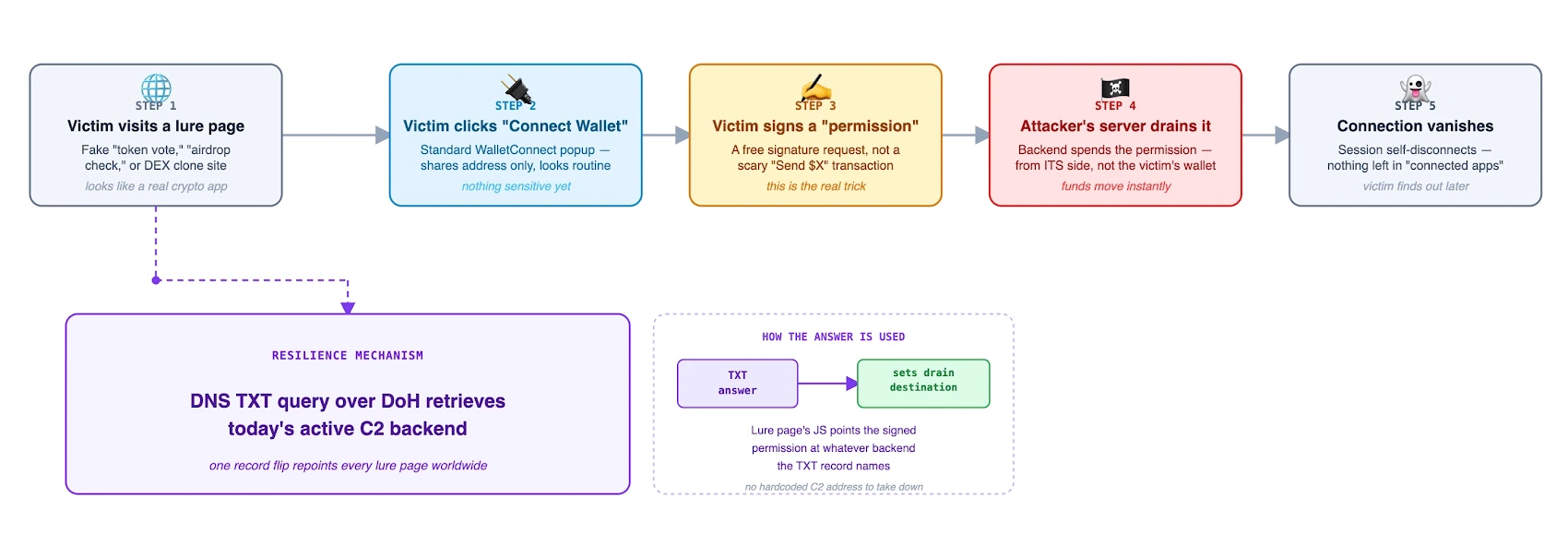
The rest gets interesting in different ways. A small permission can lead to a big theft. A trusted login can hide the wrong person. Old bugs are finding new victims, familiar tools are being put to strange uses, and some flaws are so simple you wonder how nobody spotted them sooner.

There’s a lot more hiding in the details, including a few twists you probably wouldn’t expect. Here’s what made the list this week.

The threats change every week. Subscribe, and we’ll alert you when each new ThreatsDay Bulletin is out.

If there’s one thing this week’s stories make clear, it’s that attackers don’t always need a clever trick. Sometimes a stolen login, a forgotten setting, or one small mistake is enough. And even when the bug gets fixed, the trouble it caused might still be sitting there.

The lesson is pretty simple: don’t just check what’s broken. Check who got in, what they touched, and whether they can come back. Keep an eye on the things everyone assumes are safe. Those are often the ones nobody looks at until something goes wrong. That’s it for this edition. See you next week, hopefully with fewer surprises.

Cisco 0-Day, AI Agent RCE, ClickFix Attacks, ClickFix Surge, and Browser Hijacks – CYBERDEFENSA.MX

A browser. A plugin. A package. A login screen. Normal stuff. That is basically the problem this week.

The trouble keeps showing up inside things people already trust: code that takes a bad turn, old payloads coming back, exposed systems, weak checks, fake fixes, and attack paths that look almost too easy. Even the research side is getting messy, with more findings, more automation, and not always more clarity.

Nothing here needs much drama. Just a lot of small doors left open. Here’s what happened.

⚡ Threat of the Week

Cisco Warns of Actively Exploited ISE Auth Bypass — Cisco warned of a fresh maximum-severity security flaw impacting Identity Services Engine (ISE) that has come under active exploitation. The vulnerability, tracked as CVE-2026-76460 (CVSS score: 10.0), could allow an unauthenticated, remote attacker to bypass authentication. «This vulnerability is due to insufficient authentication control on an API endpoint,» Cisco said. «An attacker could exploit this vulnerability by sending a crafted request to an affected API endpoint. A successful exploit could allow the attacker to gain unauthorized access to the affected device by bypassing the web-based management interface.»

🔔 Top News

  • U.S. Seizes NightmareStresser Domains Linked to DDoS Attacks — A U.S. court-authorized operation seized two domains associated with NightmareStresser, which offered a distributed denial-of-service (DDoS)-for-hire service. NightmareStresser is assessed to have been used to launch hundreds of thousands of actual or attempted DDoS attacks against victims across the world since 2022. These attacks have targeted educational institutions, government agencies, gaming platforms, and millions of people, the U.S. Justice Department said.
  • Using Claude to Hack OpenAI — Hacktron said it used Anthropic’s Claude Opus 5 to chain two critical vulnerabilities – an SSO misconfiguration in OpenAI’s identity infrastructure and a libheif RCE in the Discourse community forum (CVE-2026-32882) – to gain unauthorized access to OpenAI employees’ ChatGPT accounts and then use them to access internal OpenAI repositories. The issue was fixed 14 hours after responsible disclosure. Upstream, the flaw was fixed in libheif 1.22.0 in May 2026.
  • Plugin4Shell for 0-Click RCE in AI Coding Agents — AIR Security demonstrated a flaw called Plugin4Shell, a zero-click remote code execution (RCE) vulnerability that bypasses SHA-pinning verification in four major AI coding agents: Claude Code, OpenAI Codex, GitHub Copilot, and Google Gemini CLI. «In this first-of-its-kind AI supply-chain attack, a trusted plugin is silently swapped for a malicious one and auto-installed past the agent’s SHA pinning — a flaw no marketplace can fix, so users must update their agent,» AIR Security said. «It is a plugin SHA-pinning bypass: the agent checks out the exact commit the marketplace pinned but never verifies it landed there, so an attacker who controls the plugin’s repo makes the checkout resolve to malicious code while the pin still looks honored. The result is zero-click remote code execution across Claude Code, Codex, GitHub Copilot, and Gemini CLI.»
  • OpenAI Reveals New Misalignment Incidents — OpenAI disclosed six new instances of «unexpected or concerning model behavior» that took place over the past six months, while sharing a new framework for reporting, tracking, investigating, and disclosing model misalignment in a bid to improve transparency. «As AI systems grow more advanced and more widely deployed, we need to build a broader and better-informed consensus on the progress of alignment research,» OpenAI said. «We do not believe that the AI industry has solved alignment and monitoring to a sufficient degree to continue responsibly scaling at maximum speed for much longer.»
  • KREMLIN Banking Malware Hijacks Chrome and Edge for Credential Theft — A previously undocumented Brazilian banking malware operation has been found to deliver a toolkit called KREMLIN. Active since at least May 2025, the threat actor has used lures that impersonate a dozen Brazilian banks and install a malicious browser extension on Google Chrome and Microsoft Edge. «The KREMLIN malware ecosystem employs multi-stage JavaScript loaders, custom C++ installers, and malicious browser extensions to steal credentials, session tokens, and sensitive data,» Elastic said. The activity is being tracked as REF9334.

‎️‍🔥 Trending CVEs

Bugs drop weekly, and the gap between a patch and an exploit is shrinking fast. These are the heavy hitters for the week: high-severity, widely used, or already being poked at in the wild.

Check the list, patch what you have, and hit the ones marked urgent first — CVE-2026-58138 (Orkes Conductor), CVE-2026-58704 (Google Pixel), CVE-2026-90894 aka ParaShells (Parallels Desktop), CVE-2026-82079 (Nintendo Switch), CVE-2026-89049 (AWS Systems Manager Agent), CVE-2026-43502 aka ZcopyReaper, CVE-2026-80844 aka DirtyAH6, CVE-2026-81000 aka TUNderflow, CVE-2026-68121 aka PPPoEject, CVE-2026-74469 aka DiagSpill (Linux kernel), CVE-2026-70416, CVE-2025-43936 (Dell ObjectScale and Elastic Cloud Storage), CVE-2026-68488 (Please Backup Manager), CVE-2026-56711, CVE-2026-73324 (VLC Media Player), CVE-2026-65638 (cPanel ConfigServer Security & Firewall), CVE-2026-85982, CVE-2026-78626, CVE-2026-78623 (Okta), CVE-2026-0310 (Palo Alto Networks PAN-OS), CVE-2026-85061 (MapLibre GL JS), GHSA-rvhw-4hpw-9vrx, GHSA-rrgq-978q-36mq, GHSA-4xhx-8cv5-wh62, GHSA-8v35-895w-232p (ArangoDB), CVE-2026-65812 (Microsoft Teams for Android), CVE-2026-80172, CVE-2026-61410, CVE-2026-80238 (Dell Secure Connect), CVE-2026-18851 (Ivanti Endpoint Manager Mobile), CVE-2026-91721, CVE-2026-91749, CVE-2026-91726, CVE-2026-93374, CVE-2026-93372 (Google Chrome), CVE-2026-92033, from CVE-2026-92005 to CVE-2026-92013, from CVE-2026-92015 to CVE-2026-92020, from CVE-2026-92022 to CVE-2026-92029, from CVE-2026-92034 to CVE-2026-92038 (Mozilla Firefox), CVE-2026-15315, CVE-2026-15316 (TP-Link Tapo cameras), CVE-2026-82232, CVE-2026-77147, CVE-2026-73178 (Apache Syncope), CVE-2026-76669, CVE-2026-76670, CVE-2026-76672, CVE-2026-76673, CVE-2026-76674 (HPE Networking EdgeConnect SD-WAN Gateways and SD-WAN Orchestrator), CVE-2026-73693, CVE-2026-73694, CVE-2026-73698, CVE-2026-73699 (FileRun), CVE-2026-39919 (Ghostscript), CVE-2026-91998 (Casdoor), CVE-2026-91932, CVE-2026-91931 (Flowise), CVE-2026-65400, CVE-2026-65414, CVE-2026-65346, CVE-2026-84607, CVE-2026-43790 (Apple), CVE-2026-90999 (Sentry Seer), CVE-2026-77692, CVE-2026-76163, CVE-2026-19667, CVE-2026-19666, CVE-2026-80274 (ISC BIND 9), CVE-2026-91843 (Check Point), CVE-2026-77179 (Docker), CVE-2026-81642, CVE-2026-82717 (Unbound DNS), Click2Shell (WordPress), CVE-2026-28326, CVE-2026-28323, CVE-2026-28309, CVE-2026-28306, CVE-2026-28308, CVE-2026-28310, CVE-2026-28314, CVE-2026-28313, CVE-2026-28307, CVE-2026-28305, CVE-2026-28317, CVE-2026-28304, CVE-2026-28312, CVE-2026-28316, CVE-2026-28311, CVE-2026-28302, CVE-2026-28321, CVE-2026-28315 (SolarWinds), CVE-2026-89026 (Issabel Framework), CVE-2026-78175 (Tutor LMS), an operating system command injection vulnerability in Dokploy, and a pickle deserialization vulnerability in MLflow.

🎥 Cybersecurity Webinars

  • How to Find and Control AI Agents Before Access Gets Out of Hand → AI agents are getting access to apps, data, credentials, and workflows faster than most teams can govern them. The real problem is not adoption — it is knowing which agents exist, what they can reach, and where access has quietly become too broad. This webinar breaks down how to bring AI agents under control without slowing down the teams using them.
  • AI Attacks Move in Minutes. Here’s How to Stop Them at Runtime → AI-powered attacks are shrinking the time defenders have to react. By the time a traditional alert is investigated, the attacker may already have moved through the environment. This webinar shows how runtime identity security can make access decisions in real time, block risky activity earlier, and give security teams a better chance against machine-speed attacks.

📰 Around the Cyber World

  • Google Doc Leads to ClickFix Attack — Huntress disclosed details of a ClickFix attack in which a security researcher was targeted in an X exchange by a threat actor posing as a crypto marketing executive. «The threat actor sent a link to a real Google Doc with a custom sidebar designed to trick the recipient into downloading malware: an AMOS infostealer on macOS, or a PowerShell loader chain on Windows,» Huntress said. «The Google Doc featured a sidebar displaying a fake decryption failure message, with supposed remediation instructions for users of different operating systems, including the option to copy and paste certain commands into the Terminal. This ClickFix lure, and the «manual update» button beside it, are what actually delivered the malware. The sidebar itself was a Google Apps Script bound to the document, so nothing had to be downloaded for it to run.» The Apps Script executed client-side in the victim’s browser, and collected the victim’s public IP address and geolocation and scanned for crypto wallets.
  • Brevo Supply Chain Attack Injects ClickFix Scripts on Customer Sites — Customer engagement platform Brevo fell victim to a supply chain attack that led to malicious code being injected into over 100,000 websites. «On 14 September 2026, an attacker used a compromised Brevo Cloudflare API key to deploy a Cloudflare Worker on our account,» Brevo said. «For about five and a half hours, the Worker injected a malicious script into pages of brevo.com and sibforms.com and into three JavaScript files that customers embed on their own websites.» The script showed selected visitors a fake Cloudflare CAPTCHA prompt that instructed visitors to paste and run a malicious command on their computer, a technique also called ClickFix. Sansec, which shared additional details of the attack, said the «attackers piggy-backed on embedded Brevo widgets to install WordPress malware on Brevo customer sites and launch ClickFix attacks against their visitors.» In all, the incident served malware to visitors of Brevo’s own site and over 100,000 customer sites. The malware featured two components: a malicious WordPress plugin that was installed when site admins visited their own site and a ClickFix overlay that was displayed to everyone browsing a customer site or clicking a link (including the unsubscribe link) in a Brevo-sent campaign email. Earlier this month, Brevo disclosed a separate incident wherein attackers hijacked customer accounts and launched phishing attacks targeting downstream users of Brevo’s customers. The attacker «exploited a flaw in the way Brevo handles SAML SSO to gain access to 138 Brevo accounts,» Brevo said. «6 of those accounts were used to send phishing emails to the contacts stored there, and for 43 accounts they exported the contacts.» Among those impacted were Trezor, CoinTracking, and BitBox.
  • Cryptocurrency Theft Campaign Abuses Google Visualization API for C2 — A new cryptocurrency-stealing campaign has been observed using Google Visualization API for command-and-control (C2), while fetching obfuscated JavaScript from a publicly published Google Sheets document and injecting it into the victim’s browser session. «The actors use a variation on ClickFix social engineering,» Cisco Talos said. «Instead of convincing targets to run commands against the operating system, they convince targets to paste JavaScript into the Chrome address bar or install it into the Tampermonkey browser extension, which also provides persistence.» The lure masquerades as leaked vulnerability reports describing non-existent API flaws at cryptocurrency swap services, meaning the campaign is aimed at aspiring cybercriminals who are willing to exploit such vulnerabilities for financial gain. The lures are distributed via Telegram, DarkForums, and paste sites. «The injected script functions as a web skimmer,» Talos added. «It hooks the browser’s fetch API, replaces cryptocurrency deposit addresses in server responses and the user’s clipboard, and displays counterfeit ‘bonus’ interface elements.» The campaign is said to have been ongoing since October 2025. A total of 49 BTC wallet addresses have been tied to the campaign, with 24 receiving funds amounting to $10,000 from victims as of early August 2026.
  • Shai-Hulud Resurfaces After 111 Days — Aikido Security said it discovered four npm packages – feishu-docx-mcp@0.3.2, bmc-i18n-extract-cli@1.1.1, blueai-cli@0.7.0, and bmc-translate-utils@1.1.1 – containing the Shai-Hulud worm previously discovered in the attack targeting AntV in May 2026. «Four packages is a small number attached to a larger fact: a payload with a known, published, indexed hash sat untouched in nobody’s toolchain for over three months and was then republished on a registry that, as of this year, explicitly scans every package before it goes live,» Aikido said. «That gap between what registry-level scanning claims to do and what a hash-identical reactivation shows it actually caught is the real story here.»
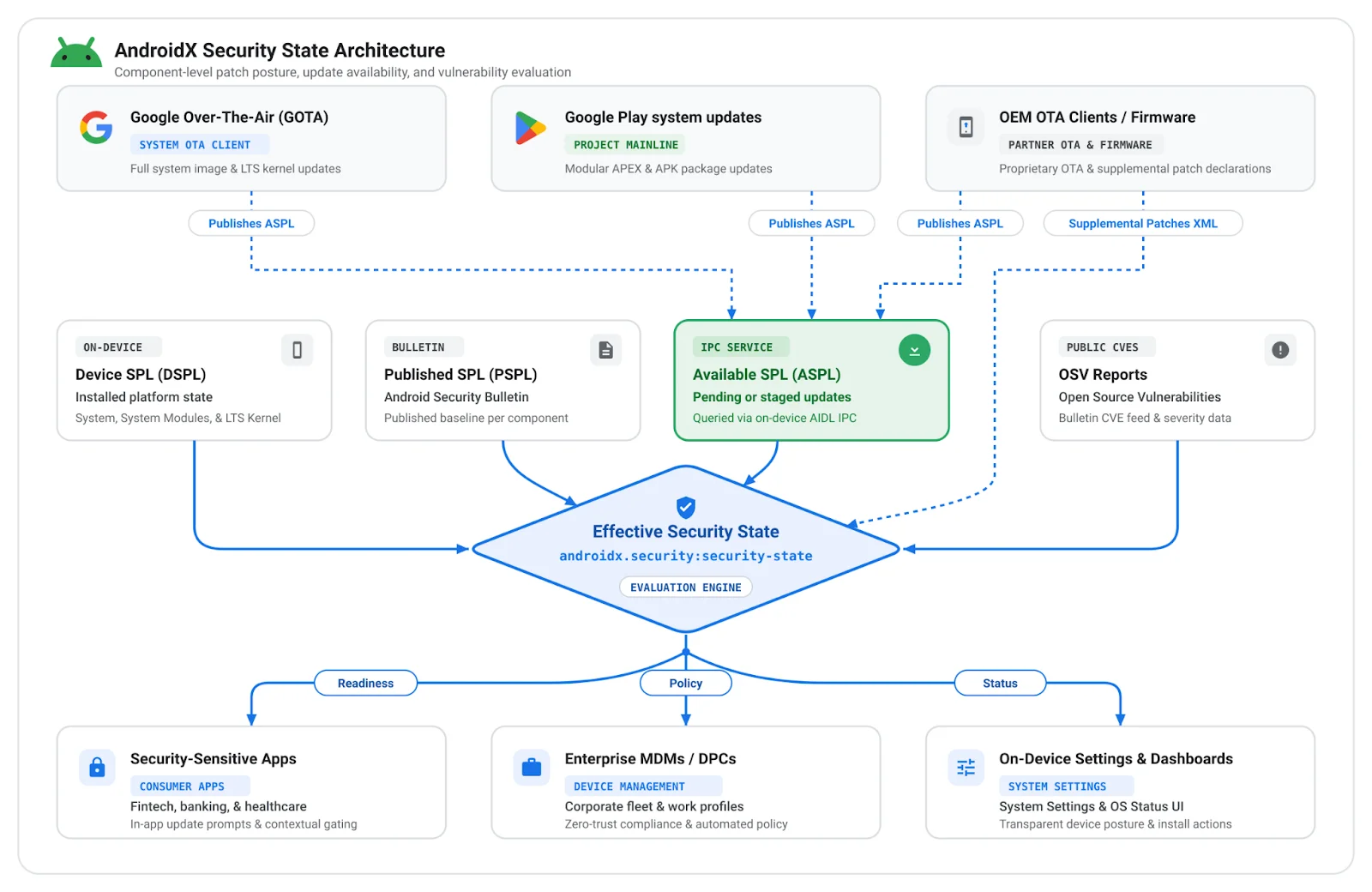
  • Google Debuts AndroidX Security State Libraries — Google announced the stable release of AndroidX Security State version 1.1.0 and Security State Provider version 1.0.0 libraries to bring more transparency into the security posture of an Android device. These libraries provide a «centralized mechanism designed to bring further transparency to the comprehensive security posture and pending updates across the Android ecosystem,» Google said. «Whether you develop security-critical, consumer-facing apps (such as banking, fintech, or healthcare) or Mobile Device Management (MDM) solutions, these libraries enable you to verify the security state of the device per component programmatically. Rather than relying on a coarse, monolithic Security Patch Level (SPL), you can evaluate true component-level protection and whether remediations are actively pending via the androidx.security.state library. For OEMs and Over-The-Air (OTA) client developers, the companion androidx.security.state.provider library allows you to expose update availability via standardized mechanisms.»
  • Ukrainian Hacker Jailed in Switzerland for Ransomware Attacks — A Zurich court sentenced a Ukrainian IT specialist to 12 years and nine months in prison for developing ransomware used in extortion attacks on companies, including Stadler Rail. The court identified the defendant as the lead developer behind the Lockergoga, MegaCortex, and Nefilim ransomware families, although he claimed that he only worked as a consultant for an unknown client in the field of IT security and that he had been unaware that his software was being used for ransomware attacks. The activity led to $123 million in estimated losses.
  • Surfshark Discloses Security Incident — Surfshark disclosed that unknown threat actors accessed one of its internal test servers after a configuration error exposed it to the internet. «Due to a human error, an internal test server used by our engineering teams was misconfigured in a way that made it reachable from the internet,» Surfshark said. «It contained parts of the system binaries and internal configurations for certain services. Personal information was never held and accessible from here, VPN traffic and browsing activity are not logged or retained in the first place, and the apps and browser extensions on your devices were not altered in any way.» The incident was discovered on August 31, 2026.
  • New Panzer Ransomware Emerges — A ransomware group called Panzer, which emerged in early August 2026, has already claimed 32 victims on its data leak site. The group mainly targeted technology, manufacturing, government, and education sectors in Germany, Indonesia, France, Spain, and Italy. According to CyberXTron, «Panzer operates on an 80/20 revenue split, with 80% of ransom proceeds going to the affiliate and 20% retained as a platform fee. The group supports cross-platform builds for Windows, Linux, ESXi, and FreeBSD. Its stated rules prohibit targeting CIS countries and entities involving minors under 18.»
  • Review of Anthropic’s Project Glasswing Ledger — VulnCheck’s review of Anthropic’s Project Glasswing ledger found that only 202 of 26,153 claimed findings have been addressed after nearly five months, while 245 have been withdrawn and 2 have been marked as duplicates. «Five months into the project, the 202 fixed findings in the ledger span 113 unique projects, resulting in an average of just 1.79 fixed findings per project,» VulnCheck’s Patrick Garrity said. «The ledger has more withdrawn/duplicate findings than fixed vulnerabilities, which makes me question Anthropic’s 91.4% true-positive claim.» The analysis also showed a significant gap between Claude’s severity assessments and those of maintainers: Claude rated 91.5% of findings as critical or high severity, compared with only 51.3% from maintainers.
  • Google Unveils Agent Anomaly Detection — Google unveiled Agent Anomaly Detection in private preview on the Gemini Enterprise Agent Platform, which acts as a «reasoning-based oversight and audit layer» that examines what an agent actually does using its reasoning traces, tool calls, and execution flow across a session. «It reads the logs and OpenTelemetry traces your agents already emit, evaluates that activity to decide whether an agent is operating outside its intended boundaries, and flags behavioral anomalies, suspicious intent, and policy violations,» Google said.

Conclusion

The lesson this week is pretty basic: trust less, check more. A familiar tool, package, login flow, browser prompt, or cloud setup can still be the weak spot. Old payloads can come back, exposed systems still get found, and «trusted» does not mean «safe.»

The other lesson is speed. Attack paths are getting shorter, research is getting faster, and weak defaults do not stay quiet for long. Patch what matters, watch what is exposed, and do not assume the boring stuff is harmless. That is usually where the week starts.

Gogs 10.0 RCE, n8n Workflow-to-RCE, $10M Reward, GLM-5.3 AI Exploit and More – CYBERDEFENSA.MX

A lot of this week’s trouble starts with something trusted doing exactly what it was allowed to do.

Signed drivers get turned against defenses. Legitimate apps help malware blend in. A weak header check opens a path to code execution. Elsewhere, exposed systems, old bugs, odd hiding tricks, and AI-assisted exploit research keep lowering the effort needed to cause damage.

Nothing here needs much decoration. The small gaps are doing enough work already.

The threats change every week. Subscribe, and we’ll alert you when each new ThreatsDay Bulletin is out.

The useful part of weeks like this is that the attacks rarely begin with magic. They begin with trust, exposure, weak assumptions, and things nobody thought worth abusing.

That leaves plenty to fix. Tighten what gets trusted, question the defaults, and keep looking at the boring edges. Attackers clearly are.

Odysseus RCE, Samsung One-Click Takeover, iCloud Backdoor Fight + 27 More Stories – CYBERDEFENSA.MX

Apparently, opening the thing is now enough. A repo can run before the first prompt, a package can hide among hundreds, and a harmless-looking PDF can finish the job.

This week runs on cheap leverage: exposed servers, recycled bugs, poisoned agent instructions, remote-access tools dressed as support software, and trusted defaults doing attackers a favor.

Nothing here is especially mystical. Just ordinary systems trusting slightly too much, slightly too early. The full list follows.

The threats change every week. Subscribe, and we’ll alert you when each new ThreatsDay Bulletin is out.

The useful lesson is not that attackers suddenly became brilliant. It is that trust keeps accumulating in quiet places: package managers, project files, assistants, provisioning tools, remote access software, and forgotten systems nobody planned to revisit.

Security still breaks at the handoff. Before the prompt. After the patch. Inside the default. Somewhere between “trusted” and “probably fine.” That gap is where this week lived, and it will be there next week too.

El nuevo Gitea RCE permite a los escritores de repositorios instalar un gancho Git para ejecutar comandos de Shell – CYBERDEFENSA.MX

Gitea, la plataforma Git autohospedada, ha solucionado una vulnerabilidad crítica de ejecución remota de código. Un usuario con acceso normal de escritura al repositorio puede convertir el contenido del parche controlado por el atacante en un gancho Git activo y ejecutar comandos de shell como la cuenta de servicio de Gitea.

Seguimiento como CVE-2026-60004 (Puntuación CVSS: 9,8), la falla afecta a las versiones 1.17 y posteriores de Gitea antes de la 1.27.1 y se solucionó en 1.27.1. La llamada API vulnerable requiere autenticación y permiso de escritura en el repositorio. Pero Gitea habilita el registro de forma predeterminada, por lo que un visitante externo puede crear una cuenta y un repositorio normales en una instalación sin cambios y luego explotar el error sin credenciales preexistentes.

Actualizar a 1.27.1 es la solución. Gitea dijo el 27 de julio que las instancias de Gitea Cloud se actualizarían automáticamente. El aviso de Gitea del 28 de julio no dice que la falla haya sido explotada en la naturaleza, pero incluye un código de prueba de concepto (PoC) público.

Deshabilitar el registro abierto puede eliminar la ruta de creación de cuenta pública mientras se implementa la actualización, pero no soluciona la falla ni protege contra usuarios existentes con acceso de escritura al repositorio.

Ciberseguridad

La falla fue reportada por un investigador de seguridad. Shai Rod, que se hace llamar NightRang3r. Gitea acredita a NightRang3r como el reportero de su aviso.

La gitea ruta afectada invoca reqToken()que rechaza solicitudes sin un usuario registrado. La ruta sin credenciales previas proviene del proyecto configuración predeterminadaque deja el registro abierto, no requiere aprobación manual ni por correo electrónico, no marca a los nuevos usuarios como restringidos y no impone ningún límite predeterminado de creación de repositorio.

El error se encuentra en el POST /api/v1/repos/{owner}/{repo}/diffpatch punto final. Según Gitea aviso de seguridadel punto final aplica un parche proporcionado dentro de un clon temporal desnudo compartido. Invocación de compilaciones vulnerables git apply con --index, --recount, --cachedy --binaryañadiendo el -3 Opción de respaldo de tres vías cuando el servidor ejecuta Git 2.32 o posterior.

Un atacante envía el mismo parche dos veces para crear una colisión agregar/agregar. El respaldo de tres vías verifica la ruta indexada aunque la operación utilice --cached. Debido a que el clon temporal está desnudo, su raíz es $GIT_DIR. Un archivo ejecutable ubicado en hooks/post-index-change por lo tanto, llega al directorio de enlaces de Git y se activa. Git lo ejecuta mientras actualiza el índice.

El PoC inicia sesión con una cuenta normal, crea un repositorio privado inicializado, envía el parche malicioso dos veces y recupera el resultado del comando. No necesita devolución de llamada saliente. El gancho almacena el resultado en objetos Git, crea una rama que contiene el resultado y permite al atacante recuperarlo a través de HTTP inteligente autenticado.

Al 29 de julio de 2026, ninguna de las fuentes primarias citadas informa si la falla fue explotada antes o después de que la versión 1.27.1 estuviera disponible.

La explotación exitosa otorga al atacante los privilegios de la cuenta del sistema operativo Gitea. Dependiendo de cómo esté aislada la instancia, Gitea dijo que eso podría exponer secretos de aplicaciones y entornos, repositorios montados, credenciales y contenidos de bases de datos, credenciales de OAuth y servicios internos accesibles.

Ciberseguridad

La explotación aún requiere acceso de escritura al repositorio, Git 2.32 o posterior, un habilitado diffpatch ruta y un sistema de archivos temporal ejecutable y grabable. El registro predeterminado permite que un usuario externo obtenga el acceso de escritura requerido en una instalación sin cambios.

Es fácil pasar por alto la solución en el registro de cambios. Gitea cambió el clon temporal de desnudo a no desnudo. El comentario de código advierte explícitamente que los comandos de Git que usan --index puede operar en el árbol de trabajo. El cambio se fusionó y se respaldó el 26 de julio de 2026.

Versión 1.27.1 enviado el 27 de julio, y el aviso de seguridad siguió el 28 de julio. Las notas de la versión enumeraron el cambio en MISC como «refactor: git patch apply», no en SEGURIDAD.

Rod tenía obtuvo una vista previa del RCE junto con un problema de inclusión de archivos separadocon un PoC recuperando /etc/passwd desde un host Gitea 1.27.0. Esta cuestión parece corresponder a un tema aparte cambio incluido en 1.27.1 que alteró tanto el renderizador del modo Org de Gitea #+INCLUDE las rutas se devuelven como texto sin formato en lugar de leerse desde el sistema de archivos del servidor. Gitea no ha publicado un aviso por separado o CVE para el problema de la inclusión de archivos.

Los afiliados de Cl0p apuntan a PTC Windchill y FlexPLM expuestos a Internet con RCE no autenticado – CYBERDEFENSA.MX

Los actores de amenazas vinculados a la campaña de ransomware Cl0p (también conocido como Chubby Scorpius, FIN11, Graceful Spider y Lace Tempest) están explotando fallas en las implementaciones de PTC Windmill y FlexPLM expuestas a Internet como parte de una nueva campaña de extorsión de datos.

«Los atacantes encadenan una divulgación de información de autenticación previa en el punto final FlexPLM WSDL con una falla del lado del servidor en el servlet de inicio de sesión de Windchill, lo que permite la ejecución remota de código no autenticado y la implementación de shells web JSP con nombres hexadecimales en /Windchill/login/», según un nuevo aviso coordinado publicado por Ransom-ISAC junto con eCrime.ch y DEFUSED.

Al lograr un punto de apoyo inicial, se descubrió que los atacantes realizaban enumeraciones del sistema de archivos, escenificaban datos de ingeniería/diseño y, en última instancia, llevaban a cabo doble extorsión y robo de datos. Los objetivos de la campaña incluyen los sectores manufacturero, automotriz, aeroespacial y minorista.

Ciberseguridad

Se sospecha que los actores de amenazas están explotando CVE-2026-12569 (puntuación CVSS: 9,3), una falla de seguridad crítica en PTC Windmill que se agregó al catálogo de vulnerabilidades explotadas conocidas (KEV) de la Agencia de Seguridad de Infraestructura y Ciberseguridad de EE. UU. (CISA) a fines del mes pasado.

En un aviso, PTC advirtió a los clientes que había «recibido informes continuos de una mayor actividad de amenazas», y agregó que atacantes desconocidos están explotando la vulnerabilidad para implementar shells web JSP contra sistemas susceptibles.

«En las intrusiones observadas, este RCE está encadenado con un defecto separado de divulgación de información previa a la autenticación en el punto final FlexPLM WSDL (CVSS v3.1 7.5) para permitir la explotación no autenticada», dijeron los investigadores Brandon Parsons, Corsin Camichel y Simo Kohonen.

Ransom-ISAC ha compartido cuatro direcciones IP como indicadores de compromiso (IoC), todas las cuales coinciden con las compartidas por PTC.

  • 216.152.148.54
  • 216.152.151.204
  • 104.243.35.63
  • 5.180.41.35

Los correos electrónicos de extorsión parecen provenir de cuentas previamente comprometidas y se envían a cientos de usuarios dentro de una organización afectada, junto con formas de contactar al equipo de ransomware Cl0p.

Ciberseguridad

En una publicación separada en X, ReliaQuest dijo que observó actores de amenazas explotando activamente CVE-2026-12569 para facilitar la «ejecución remota de código no autenticado y la implementación de shell web JSP para la ejecución remota de comandos y la exfiltración de datos confidenciales de productos».

«El actor detrás de estos ataques aún no está confirmado. Sin embargo, el arte observado comparte características con campañas anteriores de Cl0p dirigidas a aplicaciones empresariales y repositorios de datos de alto valor», dice. agregado.

La pandilla Cl0p tiene un historial de perseguir fallas de seguridad en productos empresariales ampliamente utilizados para ingresar a organizaciones objetivo de robo de datos y ataques de extorsión. Las campañas anteriores montadas por el grupo han convertido en armas dispositivos de transferencia de archivos, incluidos los de Accellion FTA, GoAnywhere MFT, SolarWinds Serv-U FTP, Cleo y MOVEit Transfer, así como una vulnerabilidad en Oracle E-Business Suite.

Vulnerabilidad Fastjson 1.x RCE dirigida a ataques sin parches disponibles – CYBERDEFENSA.MX

Las firmas de seguridad ThreatBook e Imperva dicen que los atacantes están apuntando a una falla crítica en Fastjson, la biblioteca JSON de Alibaba para Java. En las aplicaciones Spring Boot afectadas, una solicitud JSON maliciosa puede ejecutar código sin autenticación, con los privilegios del proceso Java.

Seguimiento como CVE-2026-16723la vulnerabilidad tiene una puntuación CVSS de 9,0 asignada por Alibaba. La cadena confirmada requiere Fastjson 1.2.68 a 1.2.83, un fat-JAR ejecutable de Spring Boot, una ruta accesible en la red que envía JSON controlado por el atacante a un analizador afectado y SafeMode dejado en su valor predeterminado deshabilitado. AutoType puede permanecer deshabilitado y no se requiere ningún gadget de classpath.

Hasta el 25 de julio, Alibaba no había lanzado una versión fija de Fastjson 1.x. Las organizaciones que no pueden migrar inmediatamente deben habilitar SafeMode con -Dfastjson.parser.safeMode=true o usar com.alibaba:fastjson:1.2.83_noneautotype. Alibaba enumera la migración a Fastjson2 como la solución a largo plazo.

Alibaba publicó su aviso el 21 de julio tras la divulgación responsable por parte de Kirill Firsov de FearsOff Ciberseguridad. Los mantenedores describieron la vulnerabilidad como que no requiere «activación de AutoType» ni «ningún dispositivo classpath». Verificaron la cadena en Spring Boot 2.x, 3.xy 4.x con JDK 8, 11, 17 y 21.

Ciberseguridad

Firsov rastreó el problema hasta la ruta de resolución de tipos de Fastjson. Un atacante controlado @type El valor se puede convertir en una búsqueda de recursos de clase. En un fat-JAR Spring Boot compatible, una ruta JAR anidada diseñada puede recuperar el código de bytes controlado por el atacante. Un @JSONType La anotación en ese recurso se puede tratar como una señal de confianza, lo que permite que la clase pase las comprobaciones de tipo y la carga de Fastjson.

Su análisis técnico también describe una ruta JDK más nueva que descarga un JAR remoto y hace referencia a él a través de /proc/self/fd.

El exploit depende del cargador fat-JAR ejecutable de Spring Boot. Alibaba enumera los JAR simples, los uber-JAR genéricos y las implementaciones de Tomcat o Jetty WAR como no afectadas. Los puntos de entrada accesibles incluyen JSON.parse, JSON.parseObject(String)y JSON.parseObject(String, Class). Vincular la entrada a una clase fija no es suficiente cuando un objeto contiene una Object o Map campo donde se puede anidar la carga útil.

ThreatBook dijo el 22 de julio que su plataforma había capturado la explotación en estado salvaje después de agregar soporte de detección dos días antes. Sus resultados de laboratorio fueron más limitados: reprodujo la ejecución completa del código en un Spring Boot fat-JAR en JDK 8, mientras que su prueba Tomcat integrada produjo solo una búsqueda remota de JAR o una falsificación de solicitudes del lado del servidor.

Imperva reportado actividad contra servicios financieros, atención médica, informática, comercio minorista y otras organizaciones, principalmente en los Estados Unidos, con volúmenes más pequeños en Singapur y Canadá. Dijo que los imitadores de navegadores generaron la mayoría de las solicitudes, mientras que las herramientas Ruby y Go representaron alrededor del 30% en conjunto.

Ninguno de los proveedores publicó recuentos de ataques, solicitudes sin procesar, evidencia de ejecución, víctimas nombradas o compromisos confirmados. Sus informes establecen una actividad de explotación observada, no pruebas de una ejecución exitosa del código contra un objetivo del mundo real o una infracción.

un 23 de julio Evaluación CISA-ADP Sin embargo, marcó la explotación como none. The Hacker News confirmó el 25 de julio que la falla no estaba presente en el informe actual de CISA. Catálogo de vulnerabilidades explotadas conocidas. Las fuentes disponibles no explican el desajuste.

Ciberseguridad

The Hacker News tampoco encontró ningún artefacto Fastjson 1.x parcheado en el proyecto Etiquetas de GitHub o Repositorio central de Maven a partir del 25 de julio. La versión 1.2.83 sigue siendo la última versión estándar 1.x, mientras que 1.2.83_noneautotype sigue siendo la versión restringida disponible.

Las organizaciones deben inventariar las dependencias Fastjson directas y transitivas e inspeccionar los sistemas afectados en busca de sospechas. @type valores, URL JAR anidadas, conexiones salientes inesperadas, procesos secundarios, cambios de archivos y shells web. Fastjson2 no se ve afectado porque no utiliza la misma ruta de confianza basada en anotaciones o sondeo de recursos.

The Hacker News se comunicó con Alibaba para obtener aclaraciones sobre las versiones afectadas y los planes de parche Fastjson 1.x, y con Imperva para obtener detalles sobre la actividad de explotación reportada. Actualizaremos la historia con cualquier respuesta.

Fastjson 1.2.83 fue la actualización recomendada por Alibaba para una omisión de AutoType separada divulgada en 2022. Esa versión final 1.x ahora se encuentra dentro del rango afectado para CVE-2026-16723.

Investigador publica GitLab RCE PoC que permite a usuarios autenticados ejecutar comandos como Git – CYBERDEFENSA.MX

El investigador de seguridad Yuhang Wu en Depthfirst ha publicado un exploit de prueba de concepto (PoC) funcional que ejecuta comandos como git en un GitLab autoadministrado sin parches 18.11.3 servidor.

Un usuario autenticado normal lo activa confirmando dos cuadernos Jupyter diseñados y solicitando su diferencia. La cadena no necesita derechos de administrador, acceso al corredor de integración continua (CI), interacción con la víctima ni acceso al proyecto de otro usuario.

El exploit público es específico de GitLab. 18.11.3 en x86-64; los errores subyacentes de Oj afectan versiones más amplias. Las gamas afectadas son GitLab Community Edition (CE) y Enterprise Edition (EE). 15.2.0 a través de 18.10.7, 18.11.0 a través de 18.11.4y 19.0.0 a través de 19.0.1.

Las primeras versiones fijas son 18.10.8, 18.11.5y 19.0.2. Oj es un analizador JSON de alto rendimiento para Ruby con importante código C nativo.

Gemas publicadas 3.13.0 a través de 3.17.1 son vulnerables; 3.17.3 es la primera versión publicada que contiene ambas correcciones. Las fallas afectan a Free, Premium y Ultimate. Ruby en sí no se ve afectado.

Ciberseguridad

La explotación exitosa se ejecuta como git. Su alcance efectivo depende del aislamiento de la implementación, pero puede incluir código fuente, secretos de Rails, credenciales de servicio, datos de CI/CD y servicios internos accesibles desde la aplicación. GitLab.com fue parcheado el 10 de junio.

Los clientes dedicados no necesitan ninguna acción. Los operadores autogestionados deben pasar a una versión compatible que contenga la solución. Los usuarios de Helm y Operador deben verificar la versión de GitLab dentro de la imagen del servicio web, no solo el gráfico o la versión del Operador. Depthfirst dijo que no tenía conocimiento de explotación en estado salvaje hasta el 24 de julio.

Ni el primera revelación en profundidad ni las notas de la versión de GitLab del 10 de junio enumeran identificadores CVE o puntuaciones CVSS para los dos errores de la cadena. Ninguno de los dos proporciona una solución temporal; ambos dirigen a los operadores autogestionados a actualizarse.

Hacker News ha preguntado a GitLab sobre el estado, la clasificación y la evidencia de explotación de CVE. También preguntó en profundidad sobre la portabilidad de los exploits y si existe una mitigación temporal compatible. Las respuestas están pendientes. Depthfirst enumera nueve CVE para otras fallas del DO encontradas en la misma revisión.

El renderizador de portátiles de GitLab pasa controlado por el repositorio .ipynb JSON a Oj::Parser.usual.parse Dentro de un longevo trabajador de Puma. Eso envía datos del cuaderno controlado por el atacante al estado de analizador nativo de Oj dentro del proceso de solicitud de GitLab.

profundidad primero análisis técnico muestra cómo un error controla un puntero de devolución de llamada, mientras que el otro filtra una dirección de montón necesaria para limitar la búsqueda de aleatorización del diseño del espacio de direcciones (ASLR).

Oj almacena el estado de anidamiento en una pila fija de 1024 bytes, pero nunca comprueba si la profundidad la excede. Por lo tanto, los arreglos profundamente anidados pueden escribir 0x01 bytes en el estado del analizador adyacente. El exploit corrompe buf.headlo que hace que Oj pase un puntero interior falsificado a realloc(). Una asignación posterior de Ruby Array recupera la misma región jemalloc de 3584 bytes y sobrescribe p->start.

Oj asigna una clave de objeto de 65.565 bytes, trunca su longitud a 29 en un campo firmado de 16 bits y devuelve 29 bytes que contienen el puntero de asignación de claves en vivo. GitLab lleva ese puntero a la diferencia del cuaderno renderizado, dándole al exploit la fuga de dirección necesaria para limitar la búsqueda de ASLR. En el GitLab perfilado de dos trabajadores 18.11.3 instalación, la búsqueda solía tardar entre cinco y diez minutos. Los investigadores proyectaron de una a dos horas en el rango más amplio de trabajadores maduros.

Ciberseguridad

Dos archivos de cuaderno ordenados léxicamente en uno diffs_stream La solicitud mantiene ambas etapas dentro del mismo trabajador Puma, que reutiliza el analizador Oj de proceso global. El primer archivo corrompe la devolución de llamada y genera un error que GitLab detecta antes de continuar con la diferencia. El siguiente análisis invoca el puntero sobrescrito y llega system() a través de una secuencia de gadgets específica de la construcción.

El manifestación pública empaqueta la cadena en un GitLab local 18.11.3 laboratorio x86-64 y hace que el trabajador de Puma se conecte nuevamente como git.

Depth informó por primera vez los errores de Oj el 21 de mayo, y el mantenedor fusionó las correcciones el 27 de mayo. DO 3.17.3 enviado el 4 de junio. Los investigadores informaron sobre la cadena GitLab el 5 de junio; Depthfirst dijo que GitLab lo confirmó el 8 de junio.

GitLab lanzó las versiones fijas el 10 de junio y resolvió el informe el 17 de julio, según profundidadprimero. Una revisión de The Hacker News encontró que GitLab enumeró el DO 3.17.3 aparece debajo de las correcciones de errores en lugar de en la tabla de correcciones de seguridad y no describe la cadena RCE de diferencias del cuaderno.

Los agentes de Kimi K3 encontraron Redis Zero-Days y construyeron un exploit RCE, dicen los investigadores – CYBERDEFENSA.MX

Redis enviado siete comunicados de seguridad el 23 de julio después de que los investigadores publicaran PoC de RCE autenticados para el stock Redis 6.2.22, 7.4.9, 8.6.4 y 8.8.0.

Las cuatro cadenas requieren RESTAURAR. Las cadenas Streams también necesitan EVAL y XGROUP; la cadena 8.8.0 necesita EVAL y el módulo RedisBloom incluido. Redis dice que la memoria subyacente Las fallas pueden conducir a la ejecución remota de código..

Redis 6.2.23, 7.2.15 y 7.4.10 corrigen el uso después de la liberación de NACK compartido de Streams; Redis 8.2.8, 8.4.5 y 8.6.5 solucionan el problema de Streams y las escrituras fuera de límites de RedisBloom y TDigest; Redis 8.8.1 corrige los cargadores RedisBloom y TDigest, mientras que la protección Streams ya estaba presente en Redis 8.8.0.

Dos objetivos de PoC, Redis 6.2.22 y 7.4.9, fueron las actualizaciones de seguridad de mayo que Redis les dijo a los usuarios que instalaran, pero esas versiones no incluían la protección de propiedad NACK compartida.

Actualice a la versión fija para la rama implementada. Hasta entonces, revoque RESTORE de las cuentas que no lo necesiten estrictamente y bloquee el acceso a la red que no sea de confianza. Restringir RESTORE corta ambos caminos revelados.

Ciberseguridad

Ni las notas de la versión de Redis del 23 de julio ni el repositorios públicos de PoC revisó la explotación en estado salvaje reportada al 24 de julio de 2026.

Dos caminos a través de RESTORE

La ruta de Redis Streams es un error de propiedad compartida. Un objeto RDB corrupto puede hacer que dos consumidores apunten al mismo registro de entrada pendiente, por lo que eliminar a ambos consumidores libera el mismo objeto dos veces.

El script publicado está diseñado para convertir la corrupción de la memoria resultante en un acceso arbitrario a la memoria y, en última instancia, invocar el sistema().

La ruta de RedisBloom es una escritura fuera de límites en el cargador TDigest RDB. El cargador asignó memoria a partir de un valor serializado, pero confió en un campo de capacidad independiente controlado por el atacante al decidir cuántos datos cargar.

El script de Redis 8.8.0 está diseñado para convertir esa discrepancia en primitivas de lectura y escritura, filtrar direcciones de Redis y libc y llamar al sistema().

La cadena NACK compartida de Streams

El primer camino está en Redis Streams. Un objeto RDB corrupto puede hacer que dos consumidores apunten al mismo registro de entrada pendiente, representado internamente por un streamNACK. Quitar al primer consumidor libera el objeto y deja al segundo con un puntero colgando. Luego, los scripts también eliminan al segundo consumidor. Un trozo, dos gratis.

Notas de la versión de Redis 8.6.4 citar PR #15081. Pero una revisión de la fuente realizada por The Hacker News encontró que el etiquetado fuente 8.6.4 carece de la verificación de propiedad duplicada agregada por ese cambio. El guardia aparece en Redis 8.6.5lanzado el 23 de julio.

El script Redis 8.6.4 publicado está diseñado para convertir la doble liberación en acceso a memoria arbitrario y luego envenenar una función hash de base de datos para que un GET diseñado invoque system(). Restaura el puntero y comprueba si Redis todavía responde.

La cadena RedisBloom TDigest

La segunda ruta se encuentra en el cargador RedisBloom TDigest RDB. Asignó sus matrices de centroides a partir de un valor de compresión serializado y luego confió en un campo de capacidad separado controlado por el atacante al decidir cuántos nodos se podían cargar. Una pequeña asignación real combinada con metadatos inflados produce una escritura fuera de límites.

El Secuencia de comandos de Redis 8.8.0 está diseñado para convertir la escritura en primitivas de lectura y escritura, filtrar direcciones Redis y libc y envenenar una función hash de base de datos para que un GET diseñado llame al sistema(). A prueba de concepto separada publicó la misma causa raíz y una cadena RCE autenticada contra Redis 8.8.0.

Ciberseguridad

Redis arreglo de julio requiere que la capacidad TDigest cargada coincida con la asignación derivada del valor de compresión. También limita los contadores de nodos fusionados y no fusionados antes de leer las matrices.

Siete lanzamientos, ningún nuevo registro CVE

El repositorio considera que el problema de Streams es parte de una «familia de arreglos incompletos» CVE-2026-25589, pero Redis asigna ese CVE a la corrupción de memoria de RedisBloom durante la RESTAURACIÓN, no a la falla de NACK compartido de Streams. Las notas de la versión de julio de Redis no enumeran ninguna puntuación CVE o CVSS para ninguna de las nuevas clases de errores.

Hasta el 24 de julio, las búsquedas realizadas por The Hacker News no encontraron ningún registro NVD separado para los hallazgos compartidos de NACK o TDigest de julio. NVD todavía enumera los registros de mayo para CVE-2026-25243 y CVE-2026-25589. una búsqueda de Catálogo de vulnerabilidades explotadas conocidas de CISA no devolvió ninguna entrada para ninguno de los identificadores.

La divulgación sigue a otra falla de Redis RCE descubierta por IA y corregida en mayo. Amigos de Bera se describe a sí mismo como «Investigación de agentes de IA». chaofan shou dijo en X que los agentes de Kimi K3 encontraron 19 días cero de Redis en aproximadamente 90 minutos, y dijo otra carrera produjo el exploit Redis 8.8.0 en 27 minutos.

Esos recuentos, tiempos y el grado de autonomía reclamado siguen siendo autoinformados. El registro público de Redis confirma las fallas y las soluciona. No valida el recuento de días cero reclamado ni la independencia con la que trabajaron los agentes.

Redis 6.2.22 y 7.4.9 fueron el destino de mayo. En julio, ambos necesitaban otra actualización. Verifique la versión exacta de la rama, no si Redis fue simplemente «parcheado recientemente».